Not every site has natural gas, a steam boiler or a strong power line. In many rural regions, wood is the easiest fuel to find. Solid fuel distillation lets producers make essential oil and hydrosol with what they have on hand.
What you see in the photo
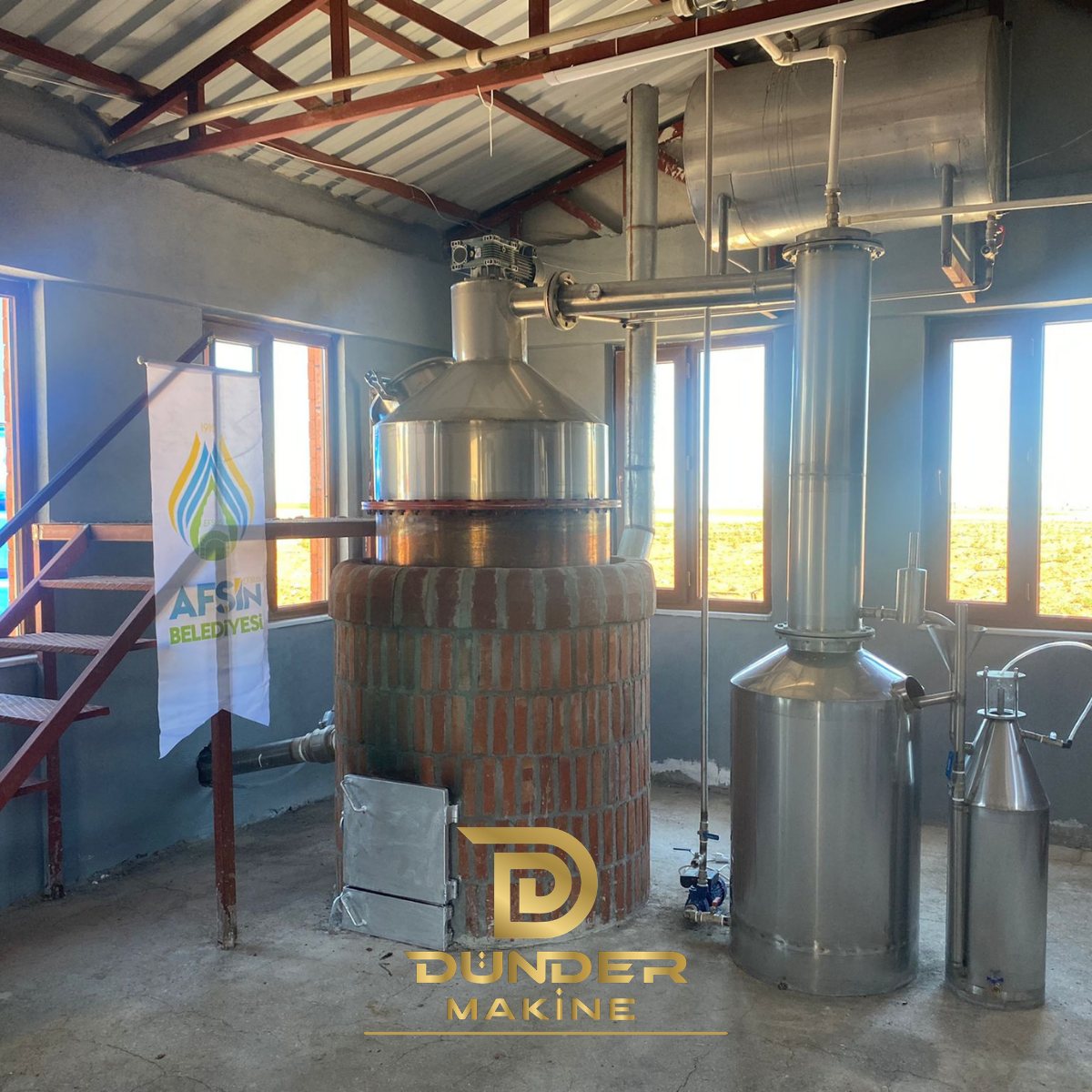
The still sits inside a brick furnace with a fire door at the bottom. The bricks hold the heat and spread it evenly around the still. Above it, the copper and steel still head leads the vapour to the condenser and a large cooling tank. Also, on the right, a steel separator and Florentine flask collect the oil and hydrosol.
Why choose solid fuel distillation?
- No boiler needed: wood or other local fuel heats the water directly.
- Low running cost: local fuel keeps costs down.
- Classic quality: hydro distillation in copper is the traditional method for rose.
In addition, the setup is simple to run. A small team can learn it in a few days.
Why copper?
Copper spreads heat evenly. Because of this, the water boils gently and the plant does not burn. That is why traditional distillers have long preferred copper for rose and other soft flowers.
How solid fuel distillation works
- First, the operator fills the still with water and flowers.
- Then the fire heats the still through the brick furnace.
- Next, the vapour rises and flows to the condenser.
- Finally, oil and hydrosol separate in the Florentine flask.
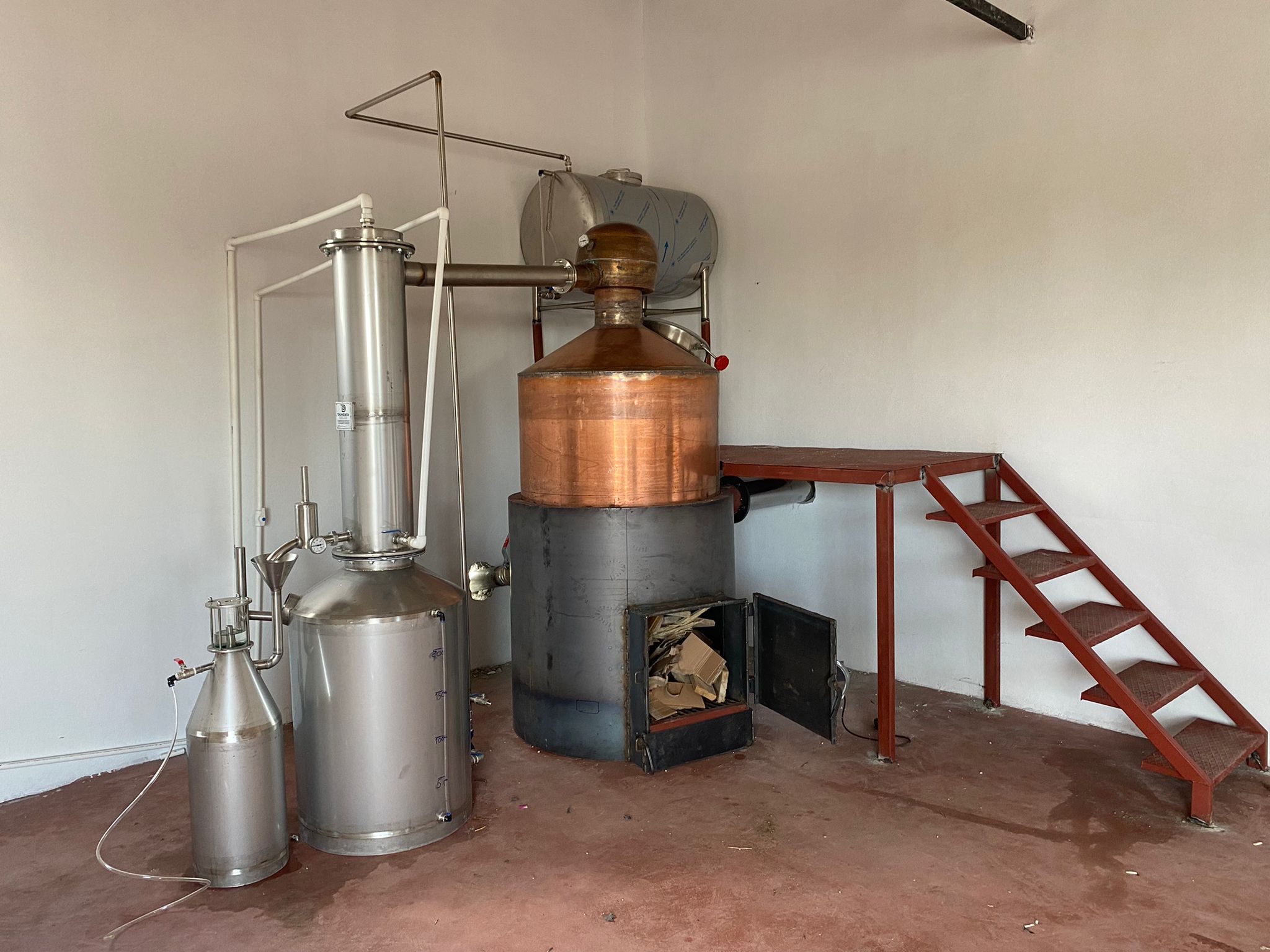
The 80 kg copper still above, for example, is a classic rose still. Many family plants in Isparta still work with this design.
Our solid fuel models
Our BK series suits rose, with 80 to 150 kg per batch, solid fuel and copper. Meanwhile, our KY series runs on solid fuel or electricity. See both on our essential oil distillation units page.
In short, solid fuel distillation brings classic quality to places without a boiler or gas line. With copper, brick and local wood, you can make fine rose oil and rose water at low cost.
Solid fuel distillation on video
This video shows a solid fuel distillation unit while it produces lavender oil.
FAQ
Does this method suit rose? Yes. It is the traditional method for rose oil and rose water.
Can I switch to steam later? Many designs allow it. So tell us your plans when you ask for a quote.
Want a wood-fired still for your farm? Contact us.