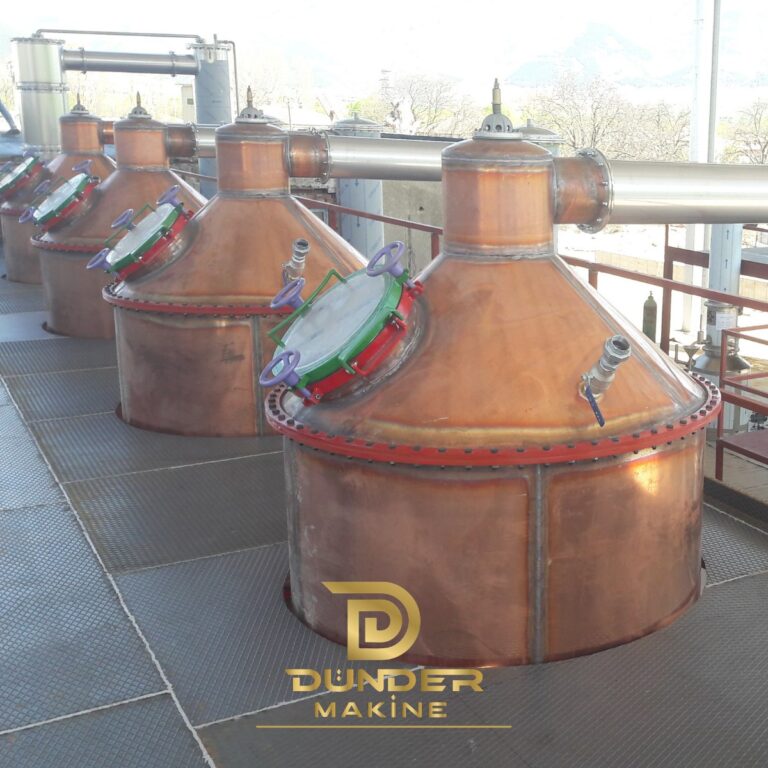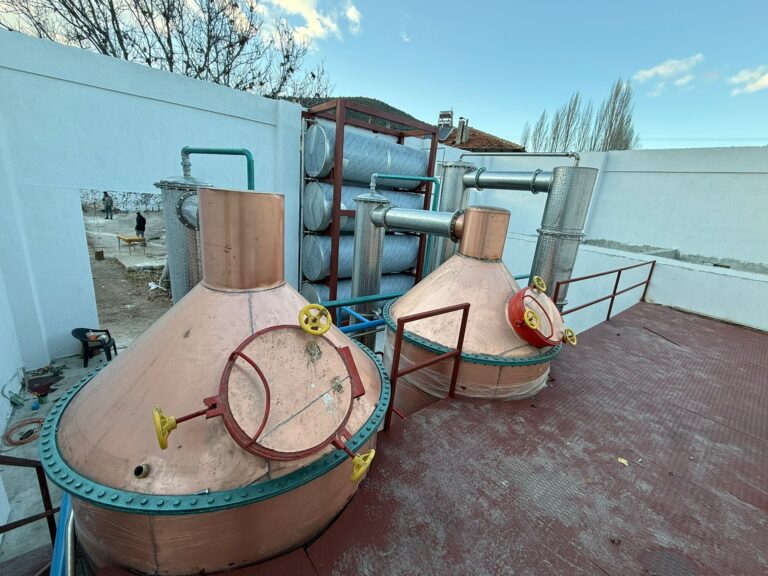
On every project, there is a moment when years of engineering meet the first rose petals. Then steam begins to carry the scent away. This season, our team reached that moment with a complete Rosa damascena distillation facility that we designed, built and started up.
For us, this was more than an equipment delivery. In fact, it continues a story that began in Isparta in 1980. It was also another chance to use decades of rose know-how in a brand-new plant.
A turnkey Rosa damascena distillation plant
We engineered the system as a complete line, not a single machine. At its heart are eight HI-500 steam distillation units of 3,500 litres each. In addition, two cohobation units support them. From the moment fresh petals arrive, the plant handles them gently and protects their delicate aroma.
How the HI-500 units handle Rosa damascena distillation
The HI-500 units use steam-based water distillation. First, an external steam generator heats the water in a steady flow. Then the heat gently releases rose oil and rose water.
Each still is made of copper. Copper spreads heat evenly, so it helps keep the oil pure. After the still, the condenser and the Florentine flask use AISI 304 or 316 stainless steel. There, the oil separates from the water.
Refining the result with cohobation
The two cohobation units take the process one step further. They redistill the rose water from the main run and recover the oil it still holds. As a result, you get more oil and a finer rose water. You can read more about rose oil and its uses here.
Adding value where the flowers grow
Interest in high-value aromatic plants keeps growing, and Rosa damascena sits at the centre of it. With reliable Rosa damascena distillation on site, growers can turn their harvest into rose oil and rose water themselves. So they add value where the flowers grow, instead of shipping raw petals.
The Dünder difference: from field to still
We do not only build the equipment; we also live the process. Through SD Essential Oils, our family grows Damask rose in Isparta. We then make rose oil, concrete, absolute and rose water with our own machines.
Therefore, we design every plant as people who run one. Petal loading, steam flow, cohobation, cooling and oil separation all reflect real harvest seasons.
On site until the first run
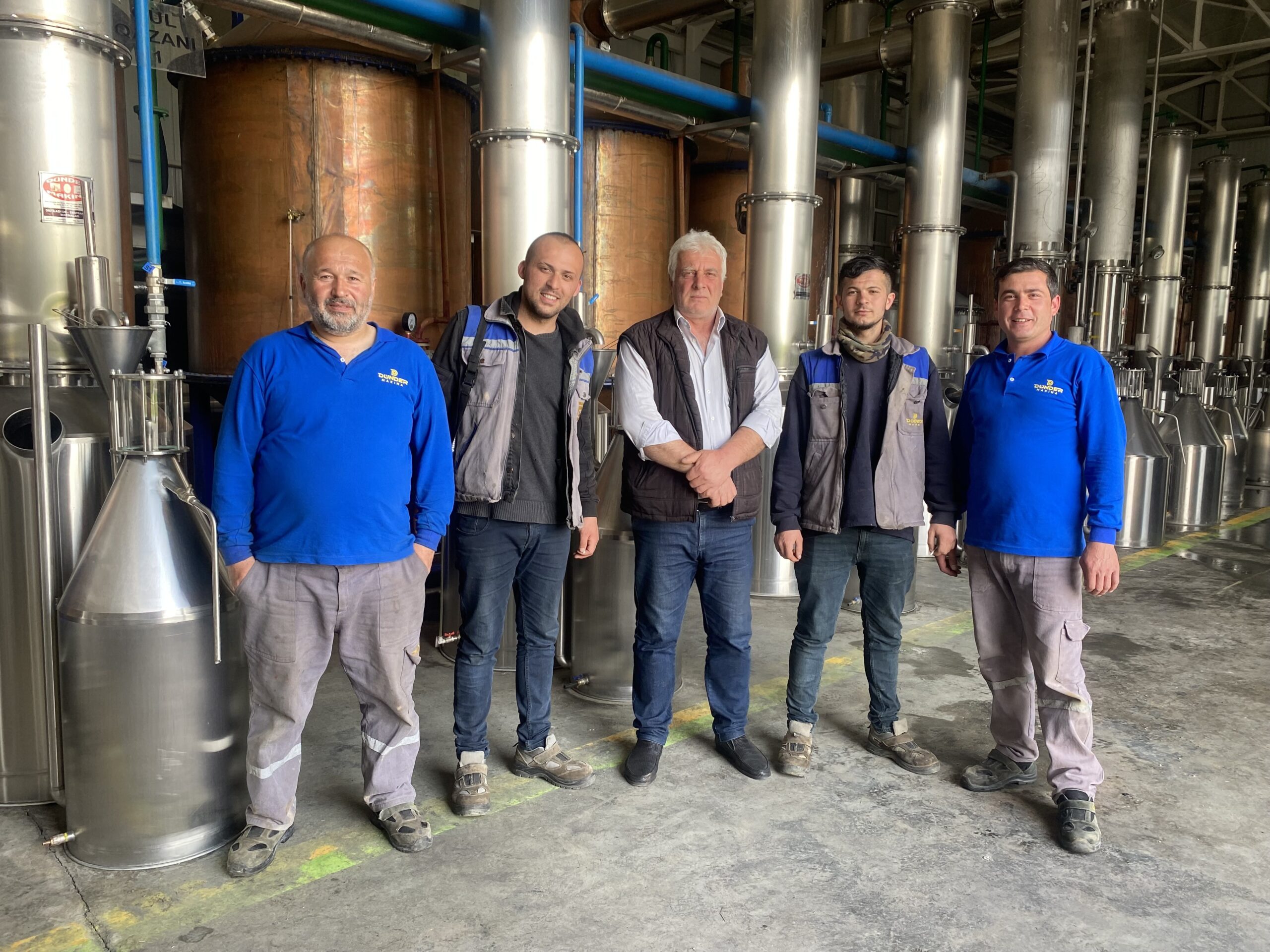
Our engineers did not simply ship the plant and leave. Instead, the team stayed through assembly, start-up and the first distillation run. They also trained the operators, so the plant went into service ready to work.
Seeing the first batch run through machines built in Isparta was a proud moment for all of us.
The facility on video
In this video, you can tour the Rosa damascena distillation facility.
The future of Rosa damascena distillation
This project is one more step from a single workshop in Isparta to plants far beyond it. Wherever Rosa damascena grows, we are ready to help with its distillation. See our essential oil distillation units and our cohobation systems.
Planning a rose, lavender or herb distillation project? Contact us.