
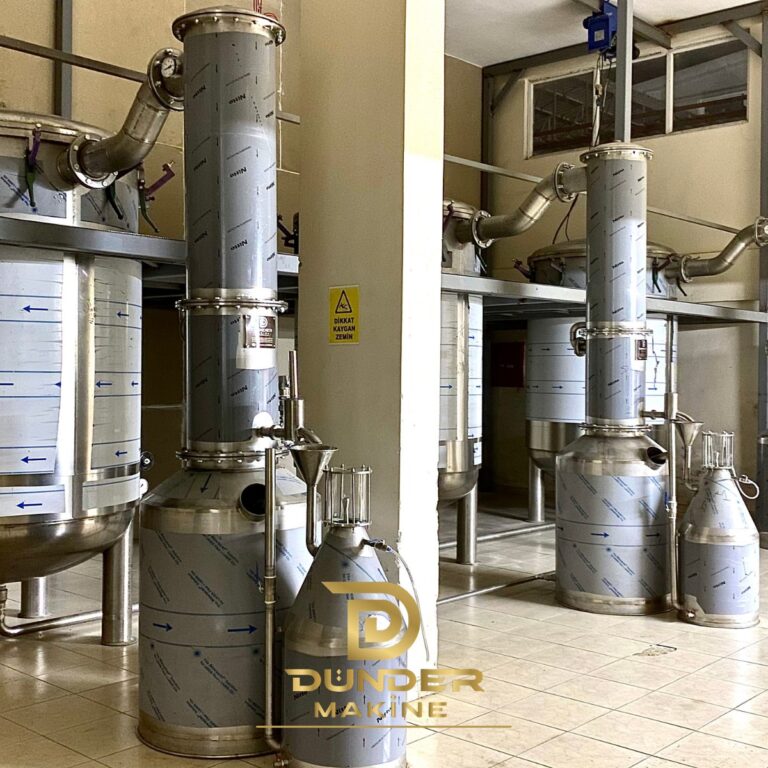
Steam Distillation Unit: A Twin Setup
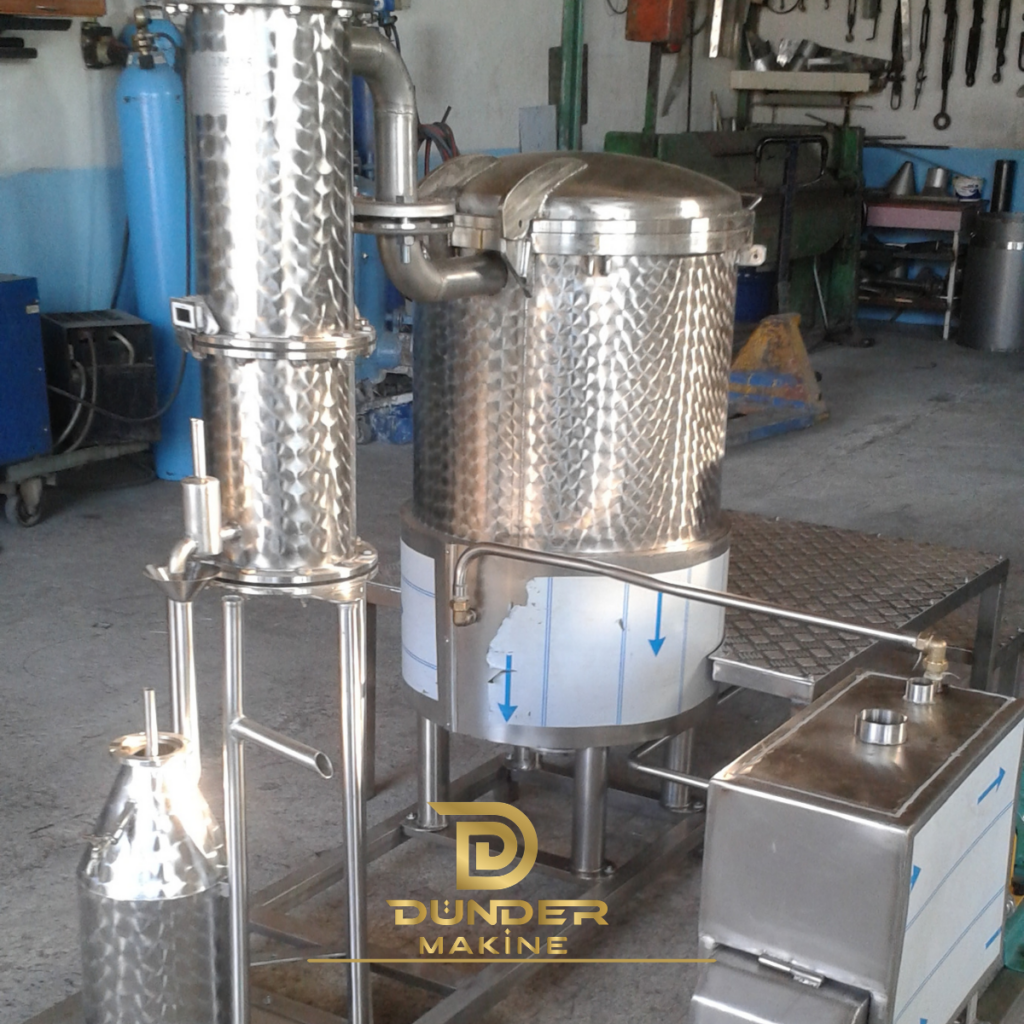
A twin steam distillation unit setup lets one still run while the other reloads. See the condensers, separators and platform in a working plant.
Essential oil distillation units for steam, hydro, solid fuel and resin distillation, producing essential oils and hydrosols from rose, lavender, thyme, mint, rosemary, frankincense and other aromatic plants. Stainless steel and copper designs from 80 kg to 5,000 litres.
An essential oil distillation unit separates the volatile aromatic compounds of a plant from the plant material using steam or boiling water. Next, the vapour carries the essential oil to a condenser, where it cools back into a liquid. A Florentine flask then separates the oil from the hydrosol. Dünder Makine manufactures complete distillation units in stainless steel and copper, from 80 kg traditional rose stills to 5,000 litre industrial steam distillation lines. For solvent-based processes, see our absolute production systems and solvent extraction systems.

In general, every Dünder Makine distillation unit follows the same six basic stages of steam distillation. However, the heating method, still design and materials change according to the raw material and the production scale.
First, the operator loads fresh or dried plant material into the still, on baskets or directly into water, depending on the method.
Then steam from a boiler, solid fuel, electric resistances or a heating jacket brings the water or plant bed to distillation temperature.
As a result, steam passes through the plant material and carries the volatile essential oil compounds out of the still.
After that, tubular or serpentine condensers cool the vapour back into a liquid mixture of essential oil and water.
Then, in the Florentine flask, the essential oil separates from the water by density, ready for collection.
Finally, you can keep the hydrosol as a product or redistill it in a cohobation system to recover the remaining oil.
Dünder Makine offers six distillation series. Use the overview below to find the right unit for your raw material and capacity, then see the full technical data of each series.
| Series | Method | Heating | Capacity | Typical raw materials |
|---|---|---|---|---|
| BI | Steam distillation | External steam generator / boiler | 500 to 5,000 L | Lavender, thyme, mint, rosemary, laurel |
| KY | Solid fuel / electric distillation | Wood or 4 x 10 kW electric resistances | 500 to 1,800 L | Lavender, thyme, mint and other herbs |
| BK | Solid fuel water distillation | Wood / stoker | 80 to 150 kg rose per batch | Rosa damascena (rose oil and rose water) |
| CI | Resin distillation | Steam generator with heating jacket | 500 to 5,000 L | Frankincense, myrrh, elemi, olibanum |
| HBI | Steam and hydro distillation | External steam and heating coils | 500 to 5,000 L | Aromatic plants needing balanced heating |
| HI | Steam-heated hydro distillation | External steam generator / boiler | 2,000 to 5,000 L | Rosa damascena (industrial rose oil) |
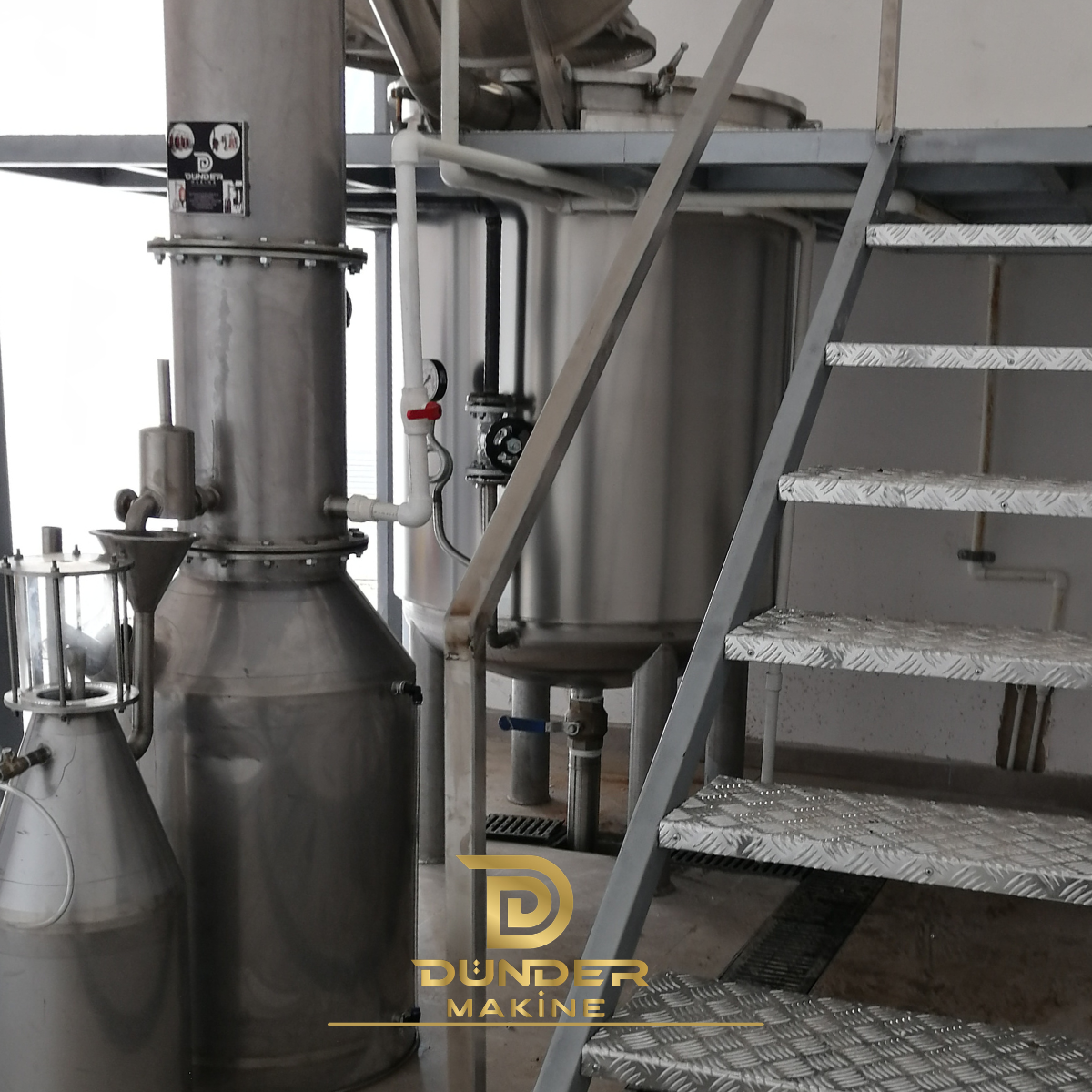
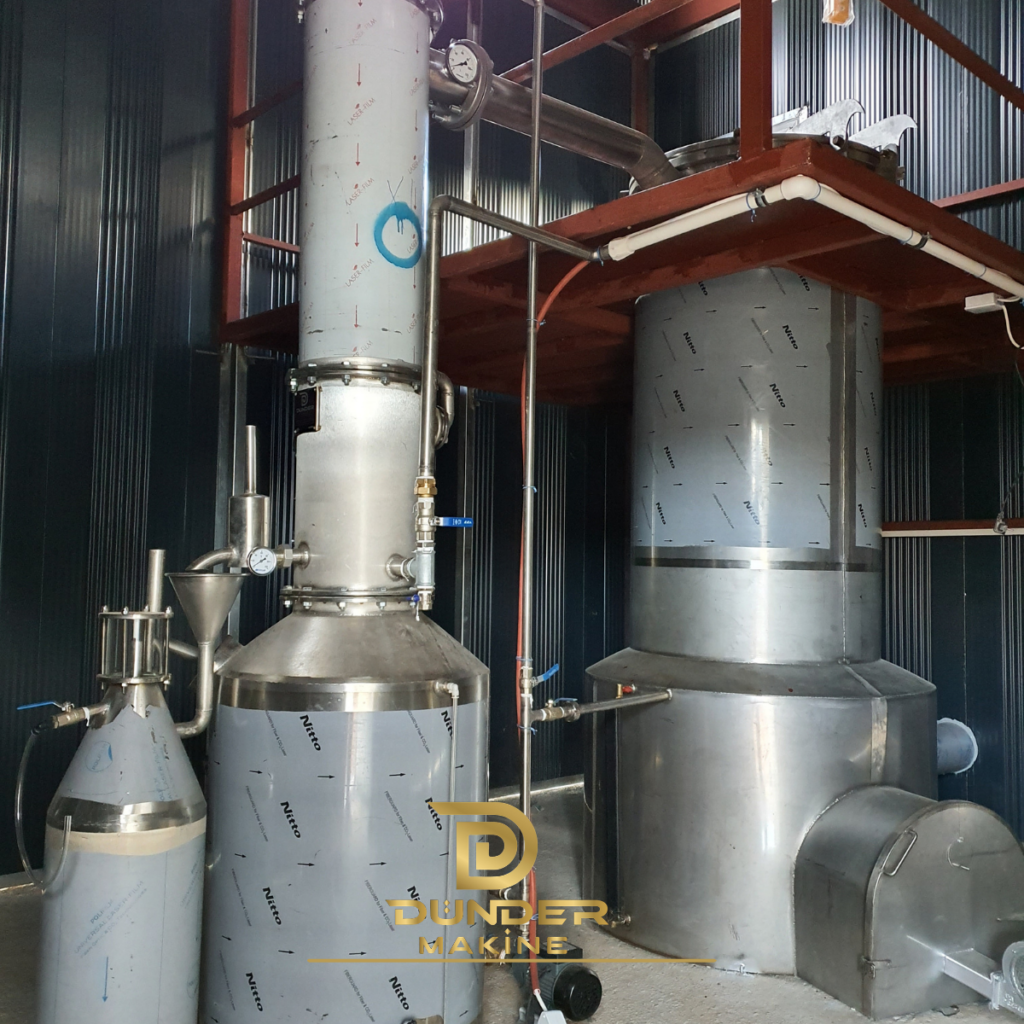
BI units work with an external steam generator. The generator feeds steam directly into the chamber holding the plant material, and the controlled steam flow protects delicate aroma compounds while extracting essential oil and hydrosol. In addition, BI models sit on a metal platform and use a crane system for safe and quick loading. They are therefore suitable for lavender, thyme, mint, rosemary, laurel and most aromatic herbs.
| Features | BI-50 | BI-100 | BI-200 | BI-500 | BI-1000 |
|---|---|---|---|---|---|
| Capacity | 500 L | 1,000 L | 2,000 L | 3,500 L | 5,000 L |
| Material | AISI 304 / 316 | ||||
| Heating | Steam generator / boiler (natural gas, fuel oil, etc.) | ||||
| Cooling | Tubular / serpentine | ||||
| Oil separation | Florentine flask | ||||
KY units heat the still with wood or other natural fuels, which keeps energy costs low and makes them practical where a steam boiler is not available. In addition, every KY unit can run on electricity with four 10 kW resistances, so producers can choose the energy source that suits their site.
| Features | KY-50 | KY-100 | KY-200 |
|---|---|---|---|
| Capacity | 500 L | 850 L | 1,800 L |
| Material | AISI 304 / 316 | ||
| Heating | Solid fuel (wood) or electric (4 x 10 kW resistances) | ||
| Cooling | Tubular / serpentine | ||
| Oil separation | Florentine flask | ||
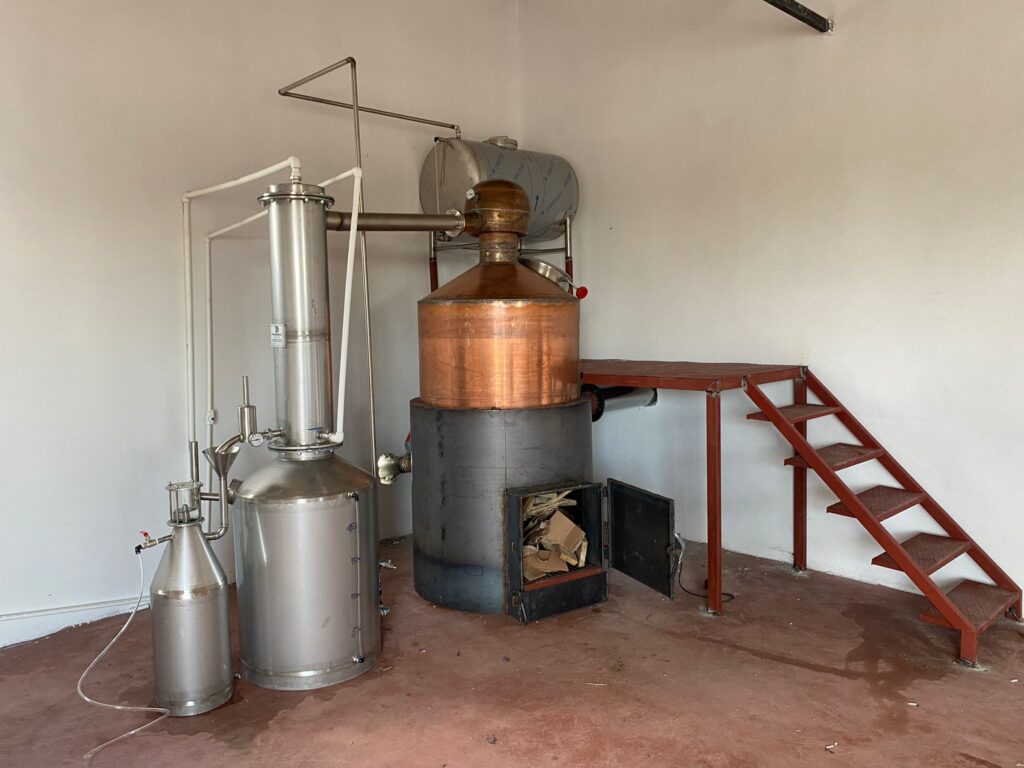
We build BK stills especially for Rosa damascena. The rose flowers boil in water heated by wood or a stoker, producing rose oil and rose water in their purest traditional form. Moreover, copper parts spread the heat evenly and help preserve the purity of the oil. In addition, each model comes with its own storage tank.
| Features | BK-80 | BK-100 | BK-150 |
|---|---|---|---|
| Capacity | 80 kg rose | 100 kg rose | 150 kg rose |
| Storage tank | 200 L | 300 L | 400 L |
| Material | AISI 304 / 316 and copper | ||
| Heating | Solid fuel / stoker | ||
| Cooling | Tubular / serpentine | ||
| Oil separation | Florentine flask | ||
CI units separate volatile compounds from plant resins. A heating jacket on the vessel wall heats the resin and water mixture indirectly, which gives uniform heat distribution, and the released compounds are condensed and collected. For this reason, they suit frankincense, myrrh, elemi and olibanum.
| Features | CI-50 | CI-100 | CI-200 | CI-500 | CI-1000 |
|---|---|---|---|---|---|
| Capacity | 500 L | 850 L | 2,000 L | 3,500 L | 5,000 L |
| Material | AISI 304 / 316 | ||||
| Heat source | Steam generator / boiler (natural gas, fuel oil, etc.) | ||||
| Heating system | Jacket heating, direct / indirect | ||||
| Cooling | Tubular / serpentine | ||||

HBI units combine water distillation and steam distillation. In these units, steam from an external generator passes through the plant material while heating coils raise the water temperature, giving balanced heating for high-quality essential oil and hydrosol.
| Features | HBI-50 | HBI-100 | HBI-200 | HBI-500 | HBI-1000 |
|---|---|---|---|---|---|
| Capacity | 500 L | 850 L | 2,000 L | 3,500 L | 5,000 L |
| Material | AISI 304 / 316 | ||||
| Heating | Steam generator / boiler (natural gas, fuel oil, etc.) | ||||
| Cooling | Tubular | ||||
HI units are industrial stills for Rosa damascena. In this case, steam from an external generator heats the water in which the rose flowers boil, giving efficient and controlled production of rose oil and rose water at large scale. Available in stainless steel with copper.
| Features | HI-200 | HI-500 | HI-1000 |
|---|---|---|---|
| Capacity | 2,000 L | 3,500 L | 5,000 L |
| Material | AISI 304 / 316 and copper | ||
| Heating | Steam generator / boiler (natural gas, fuel oil, etc.) | ||
| Cooling | Tubular / serpentine | ||
| Oil separation | Florentine flask | ||

All values are for reference. However, our machines are standard designs, and we can modify them according to your raw material, capacity and site requirements.
Cohobation takes place after distillation. In this step, the system redistills the hydrosol collected at the end of distillation to separate the volatile compounds still dissolved in it. As a result, this raises essential oil yield and improves hydrosol quality, and it is especially important in rose oil production. In addition, our phenyl ethyl alcohol production system processes rose waters further.
| Process step | Redistillation of hydrosol after distillation |
| Equipment | Cohobation system, heating system, hydrosol return line |
| Purpose | Higher essential oil yield and better hydrosol quality |
| Application | Essential oil and rose oil production |

Our distillation units are built for high essential oil yield, clean separation and reliable long-term operation, with heating options that match your site and energy costs.
Built from AISI 304 / 316 stainless steel, with copper options for traditional rose distillation.
Steam boiler, solid fuel, electric resistances or heating jacket, chosen to fit your site and energy costs.
Florentine flasks separate essential oil from hydrosol cleanly and continuously.
In addition, optional cohobation recovers the essential oil that remains dissolved in the hydrosol.
Standard designs that we modify according to your raw material, capacity and site.
Design, manufacturing, installation, commissioning, operator training and maintenance from one supplier.
In short, the full range covers small traditional stills and large industrial lines. Moreover, we engineer every unit according to your capacity and raw material.
Our distillation units process a wide range of flowers, herbs, leaves, peels and resins. However, the right series depends on the raw material, the product you want and your production scale.
Rosa damascena oil and rose water with BK and HI stills.
High-volume lavender oil with BI steam distillation.
Thyme oil and hydrosol for food, cosmetic and pharmaceutical use.
Peppermint and spearmint oil with steam distillation.
Rosemary oil with controlled steam flow.
Laurel (bay) leaf oil with steam distillation units.
Resin oils with CI jacket-heated units.
Bitter orange and citrus peel oils with steam distillation.
Producers use the essential oils and hydrosols from our distillation units across the fragrance, cosmetic, food and natural ingredients industries.
Farm and industrial distilleries producing oils for the global market.
Rose oil and other essential oils for perfumery.
Essential oils and hydrosols for skincare, soaps and body care.
Rose water and herbal hydrosols for food and confectionery.
Pure essential oils for wellness applications.
Herbal oils such as thyme and mint for pharmaceutical use.
Video Gallery
Watch our steam, hydro, solid fuel and resin distillation units at work with rose, lavender, thyme, citrus and other aromatic plants.
Answers to the most common questions about distillation methods, capacities, heating options and turnkey projects.
In steam distillation, steam from an external generator passes through the plant material, which sits above the water. In hydro distillation, the plant material is immersed in water that is heated. Steam distillation suits most herbs and leaves, while hydro distillation is preferred for delicate flowers such as Rosa damascena.
For traditional small-batch production, our BK solid fuel stills (80 to 150 kg rose per batch) are used. For industrial rose oil and rose water production, HI hydro distillation units from 2,000 to 5,000 litres are used, usually together with a cohobation system.
From 80 kg rose per batch (BK-80) up to 5,000 litre stills (BI-1000, CI-1000, HBI-1000 and HI-1000). Several stills can be combined into a complete plant.
External steam generator or boiler (natural gas, fuel oil, etc.), solid fuel (wood or stoker), electric resistances (KY series, 4 x 10 kW) and jacket heating for resin distillation.
AISI 304 or AISI 316 stainless steel. BK and HI rose units are also available with copper.
Yes. The CI series is designed for frankincense, myrrh, elemi and olibanum, using jacket heating for uniform heat distribution.
Yes. All models are standard designs and can be modified according to your raw material, capacity, available utilities and site.
Yes. We provide design, manufacturing, installation, commissioning, operator training, maintenance and after-sales technical support.
Tell us your raw material, daily capacity, preferred heating source and installation country. Then our engineering team will recommend the right distillation series and prepare a customized proposal.
Trusted by customers in more than 30 countries since 1980, with complete engineering, manufacturing, installation and commissioning services. See our references.
A twin steam distillation unit setup lets one still run while the other reloads. See the condensers, separators and platform in a working plant.
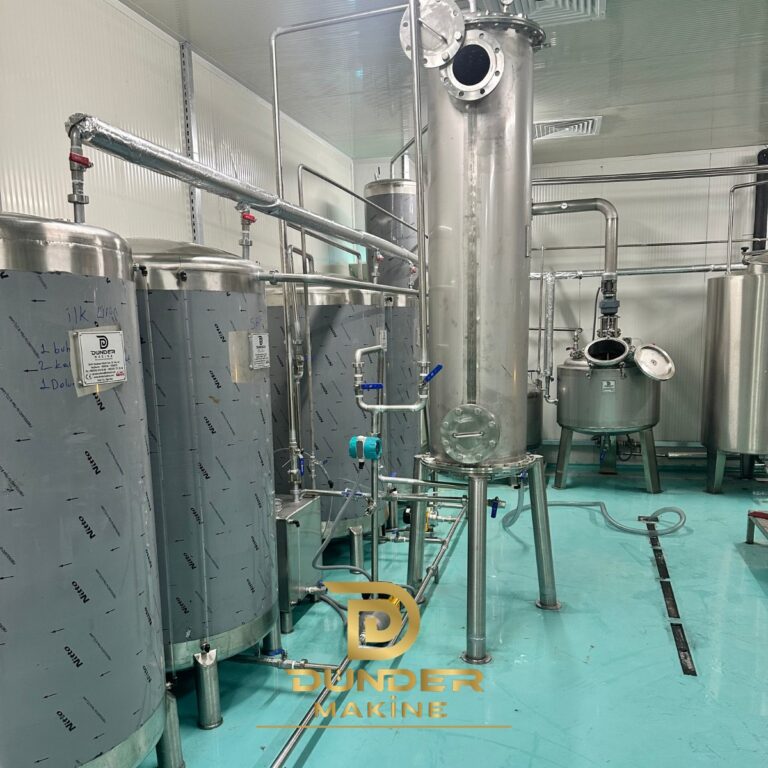
A distillation column with product tanks and a jacketed reactor separates fractions in a clean room. See how the layout keeps each product apart.
Dünder Makine, founded in 1980, is a leading manufacturer of stainless steel distillation and extraction equipment for the global fragrance, cosmetics, and essential oils industry.
Serkan DÜNDER: +90 554 474 9580
Aytaç DÜNDER: +90 544 562 4673
Süleyman DÜNDER: +31 6 3452 8881
Copyright © 2026 Dünder Makine | Videos | Privacy Policy