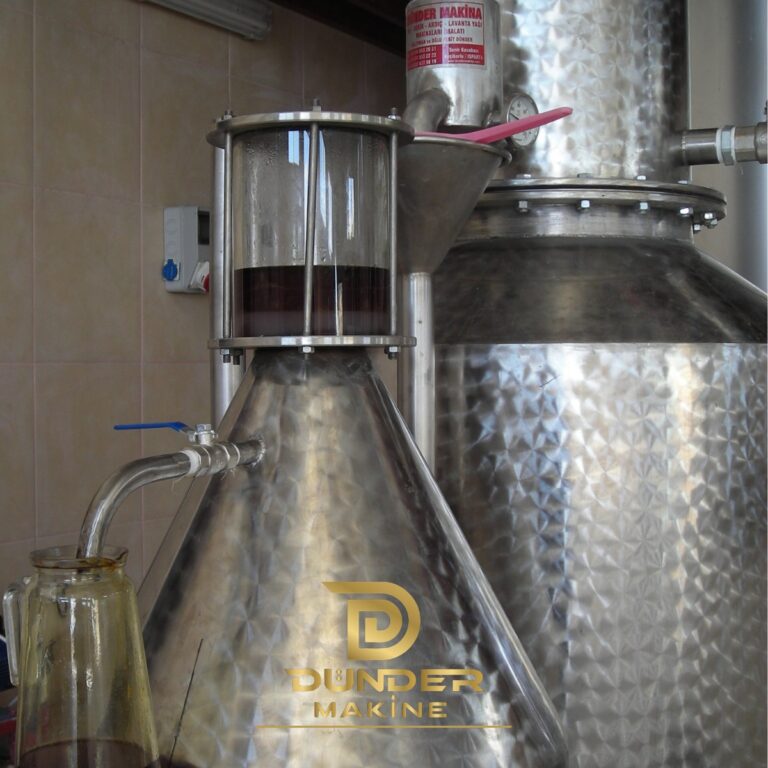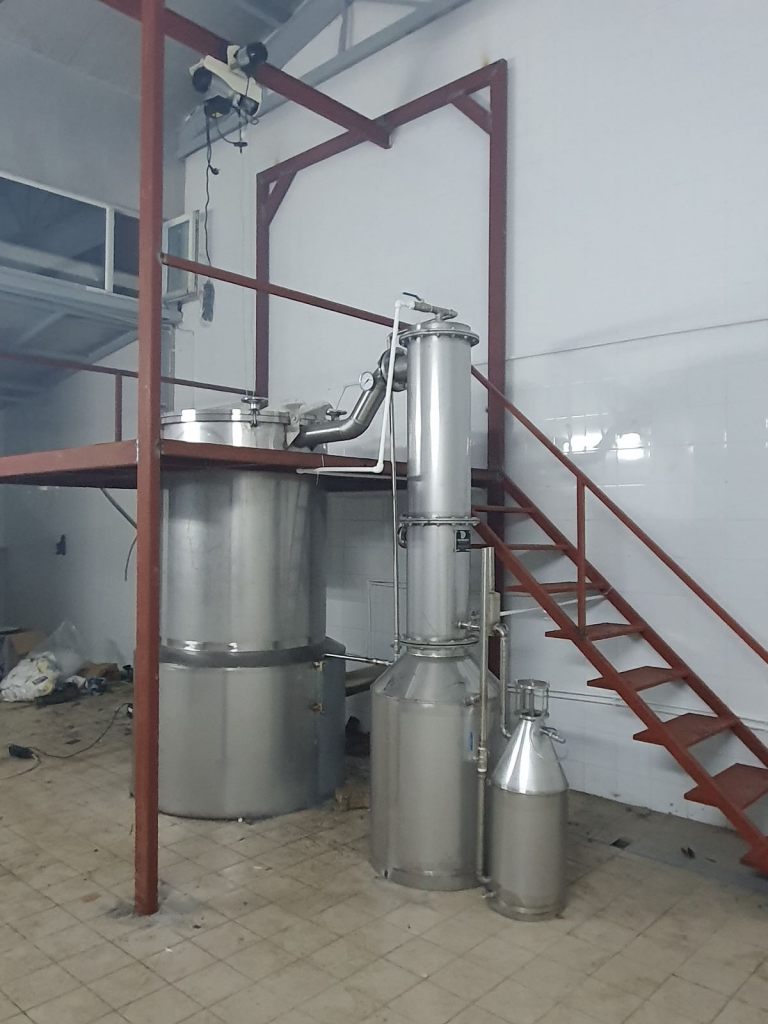
In solvent extraction, the extractor dissolves the aroma of the flowers. But the result is still a solution. The step that turns it into finished concrete is evaporation, and a vacuum evaporator for concrete does that job.
Why use a vacuum evaporator for concrete?
Aroma compounds in rose and jasmine are sensitive to heat. If you boil off the solvent at normal pressure, part of the fragrance may change or get lost. Under vacuum, however, the solvent boils at a much lower temperature. So the machine removes it gently while the aroma stays in the concrete.
This is the same idea behind vacuum evaporation in many other industries.
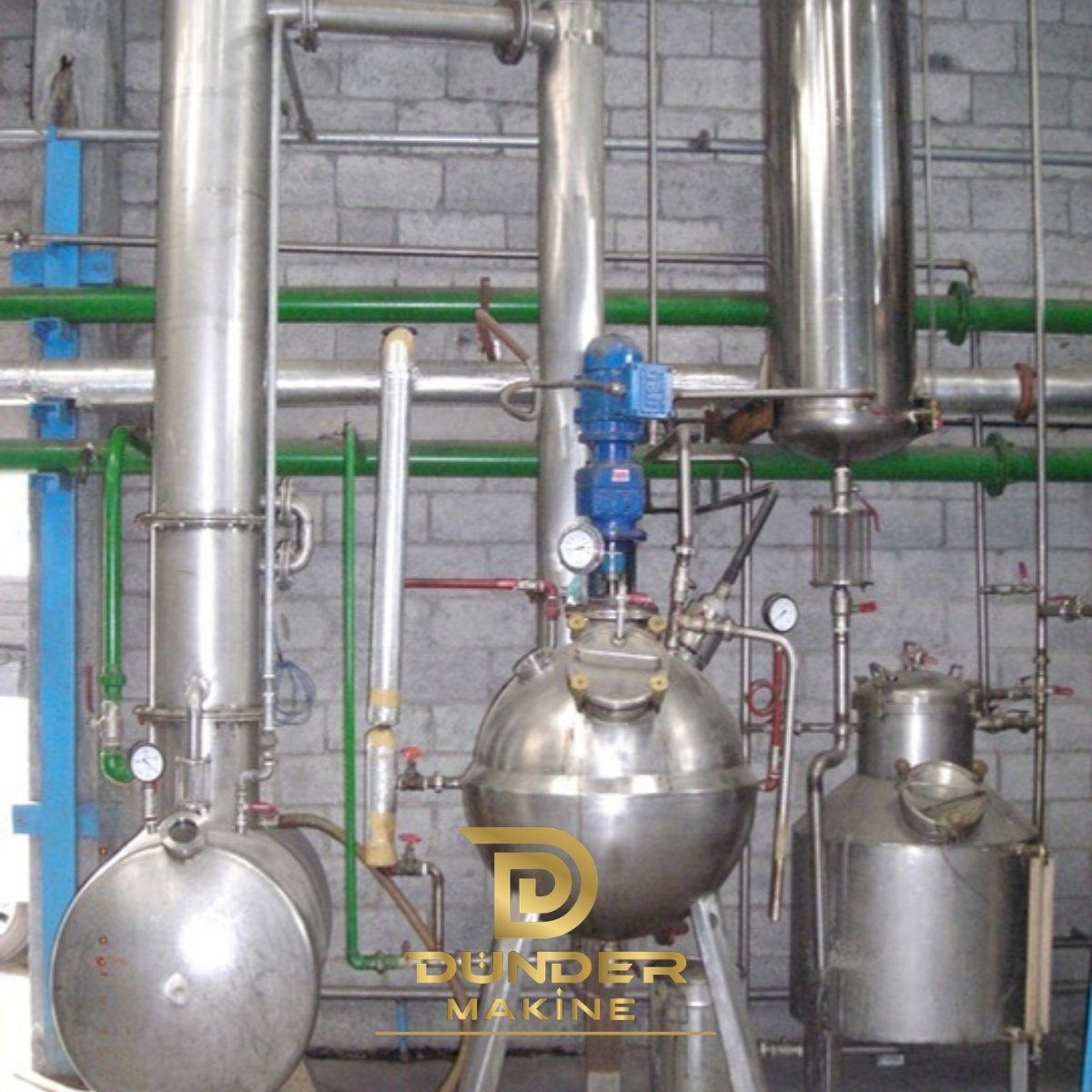
What you see in the photo
The heart of this unit is a round stainless steel vessel. An agitator, driven by an electric motor, keeps the product moving. Also, the round shape gives a large heated surface and drains fully.
Gauges on the vessel show the temperature and pressure. Meanwhile, the column above leads the solvent vapour to the condenser. There it turns back into liquid, ready for reuse.
Where it sits in the extraction line
- First, the extractor dissolves the aroma compounds into the solvent.
- Then the solution settles and passes through filters.
- Next, a distiller removes most of the solvent.
- Finally, the vacuum evaporator removes the rest and leaves the concrete.
Sizes of our vacuum evaporator for concrete
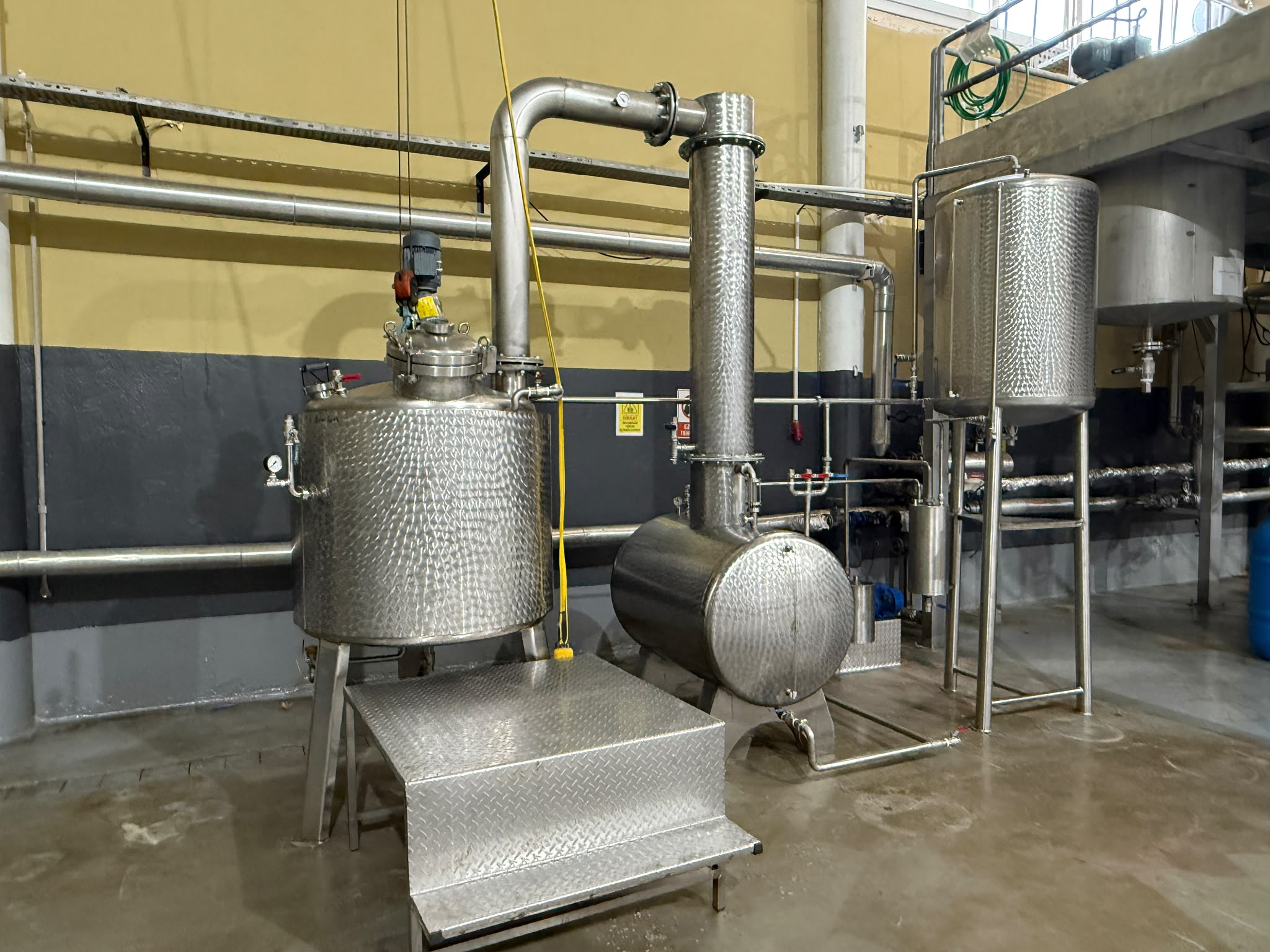
Our EVP series comes in 250, 300 and 600 litre sizes. Each one has indirect heating and a vacuum system. For example, the EVP-600 below suits large lines.
See the full line on our industrial extraction systems page.
In short, a vacuum evaporator for concrete protects the aroma that you worked hard to extract. It also recovers solvent for the next batch, so it saves money every day.
Watch rose concrete production
This video follows the rose concrete extraction process from flowers to concrete.
FAQ
Why recover the solvent? Because you reuse it in the next batch. As a result, costs and emissions both drop.
What comes after the concrete? You can refine concrete into absolute with alcohol in an absolute plant.
Which steel do you use? AISI 304 or AISI 316 stainless steel.
Need an evaporator for your line? Contact us.