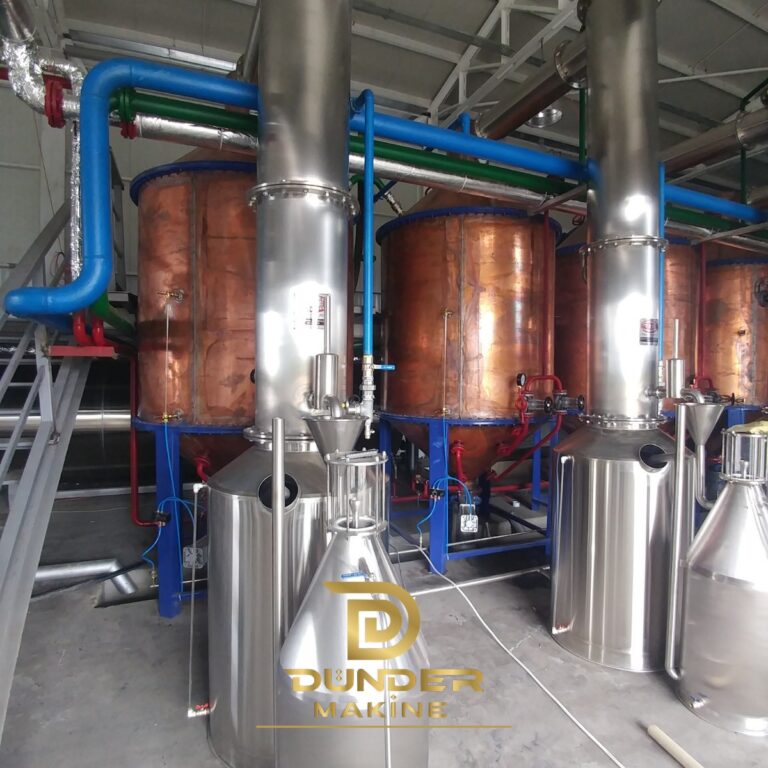
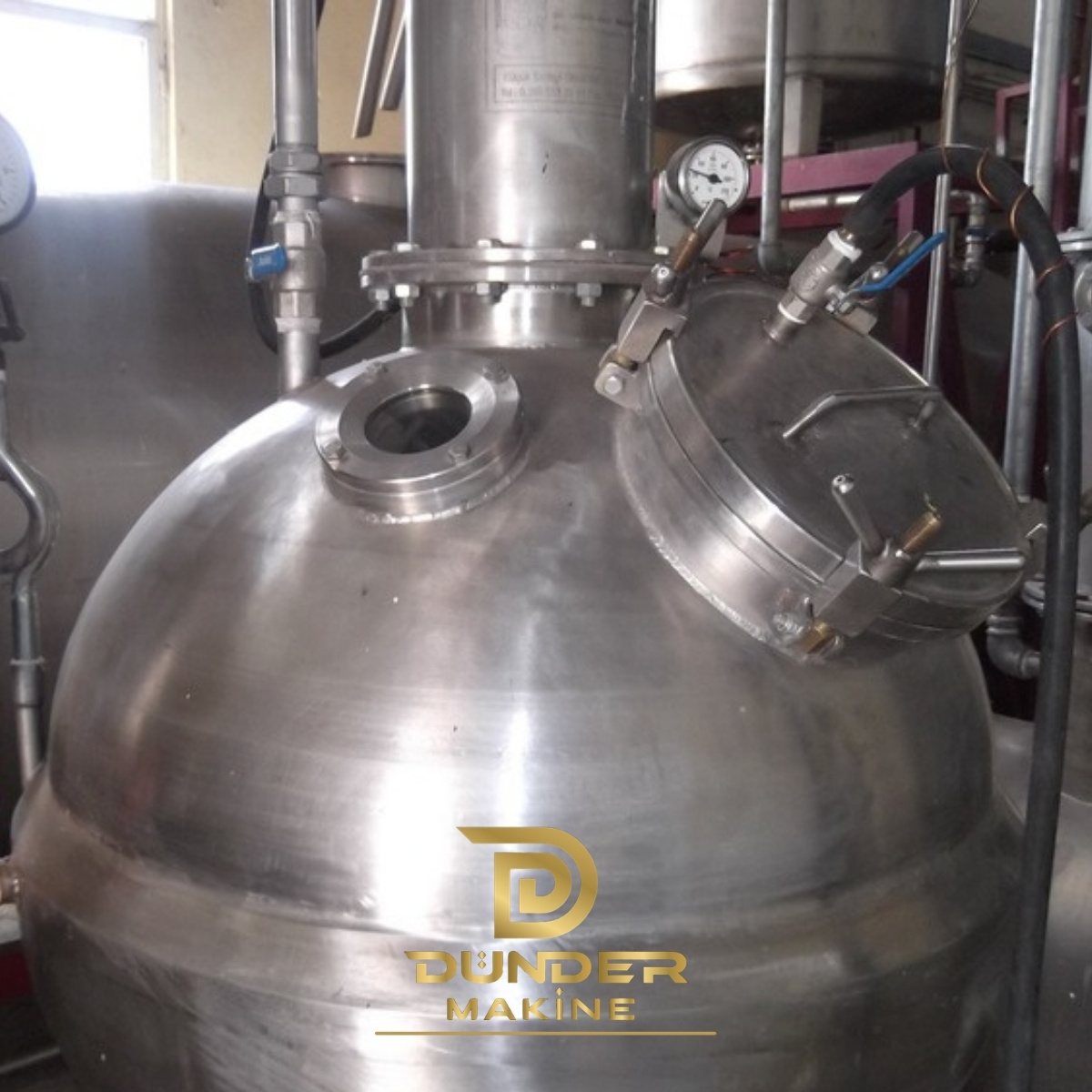
A vacuum evaporator unit looks simple from a distance: a vessel, a column and a condenser. Up close, however, small details decide how safe and easy it is to run every day. This photo shows the top of one of our evaporators.
Round vessel
The round shape handles vacuum well. Also, it drains fully and offers a large heated surface for even evaporation.
Quick-opening manhole
The clamp-type cover opens without tools. So operators can check, clean and empty the vessel quickly between batches.
Sight glass on the vacuum evaporator unit
A sight glass on top lets the operator watch the liquid level. In addition, it shows how the liquid boils, without opening the vessel and breaking the vacuum.
Gauges and valves
A thermometer and pressure points give a constant reading of the process. Meanwhile, ball valves on each line give precise control of vacuum, solvent and product flows.
Why use a vacuum evaporator unit?
Under vacuum, solvents and alcohol boil at a much lower temperature. As a result, the unit protects heat-sensitive aromas in extracts, concretes and absolutes. It also saves energy. You can read more about the idea of vacuum evaporation here.
Vacuum evaporator unit sizes
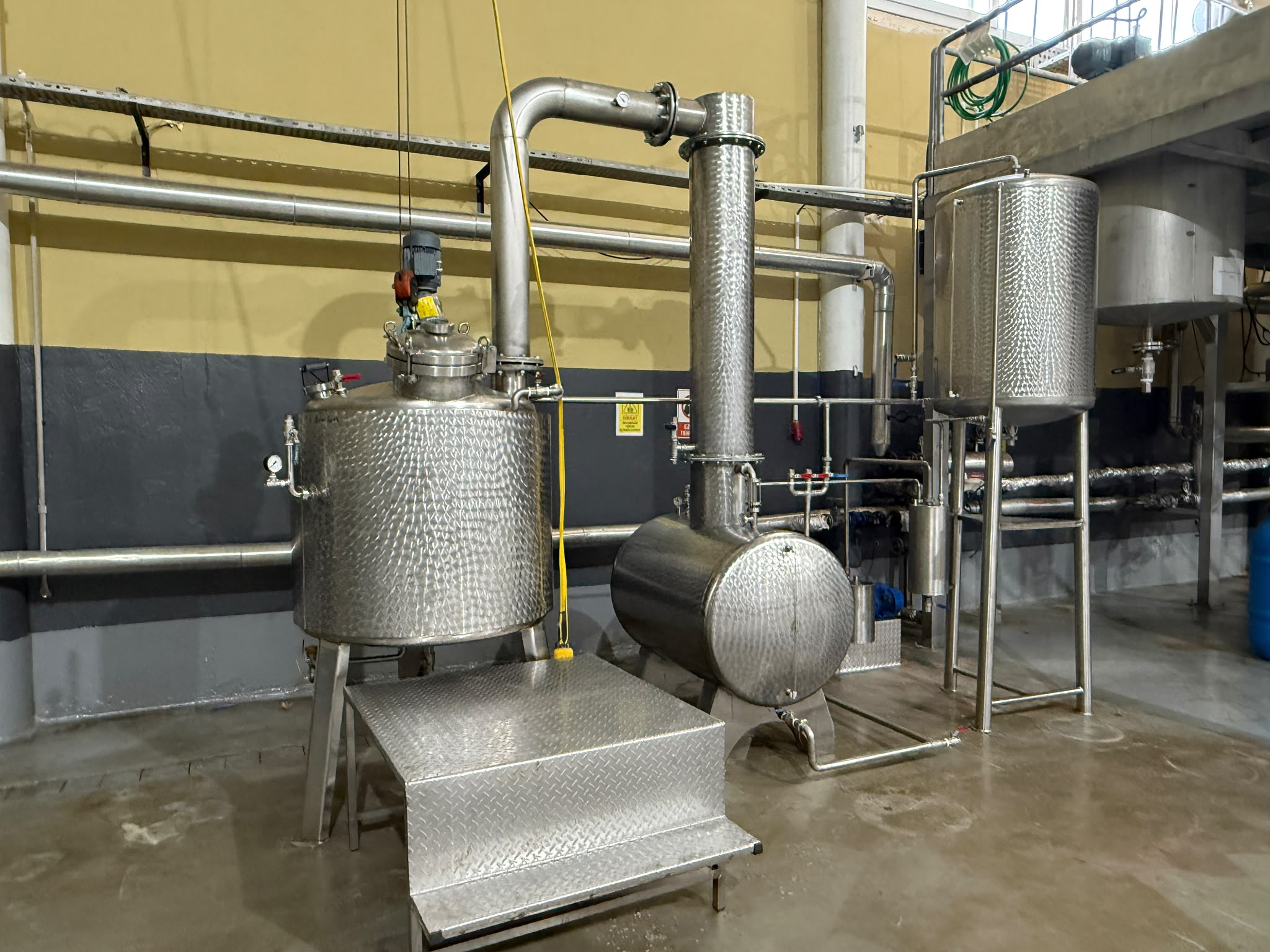
Our EVP series comes in 250, 300 and 600 litre sizes, each with a vacuum system. For example, the EVP-600 above suits large lines. See where it fits on our industrial extraction systems page.
In short, a vacuum evaporator unit is only as good as its details. A round vessel, a quick manhole, a clear sight glass and precise gauges make daily work safer and faster. Also, they help your team run every batch the same way.
Watch the evaporator in operation
In this video, you can follow a vacuum evaporator while it recovers solvent in a running plant.
FAQ
What does it do? It removes solvent or alcohol from an extract at low temperature. Then it recovers it for reuse.
Which steel do you use? AISI 304 or AISI 316 stainless steel.
Need an evaporator? Contact us.