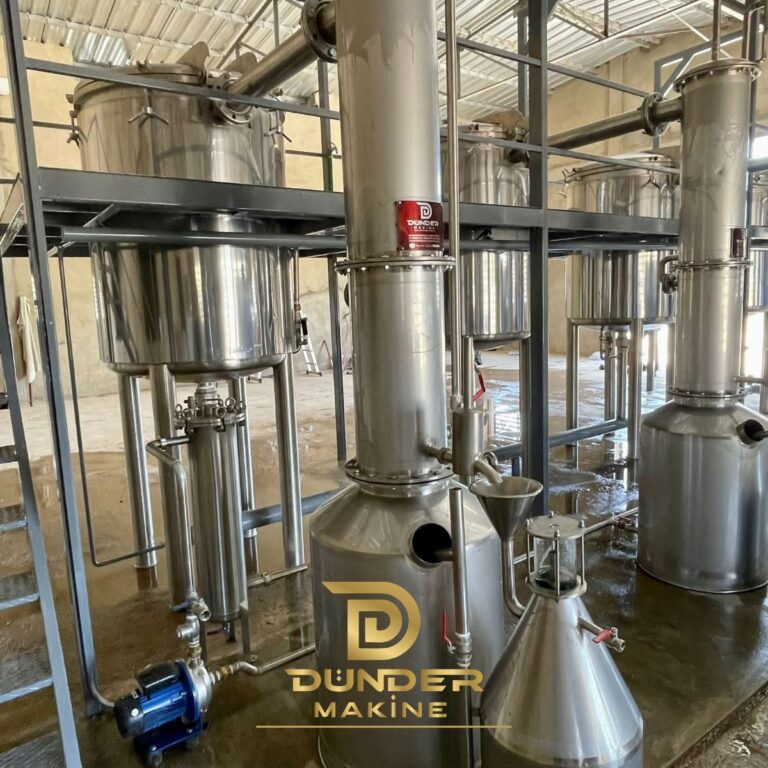
Rosemary is valued for its essential oil, but also for its extracts. Food, cosmetic and supplement makers use them widely. For rosemary extraction at industrial scale, the plant in this photo uses a turbo extractor.
What you see in the photo
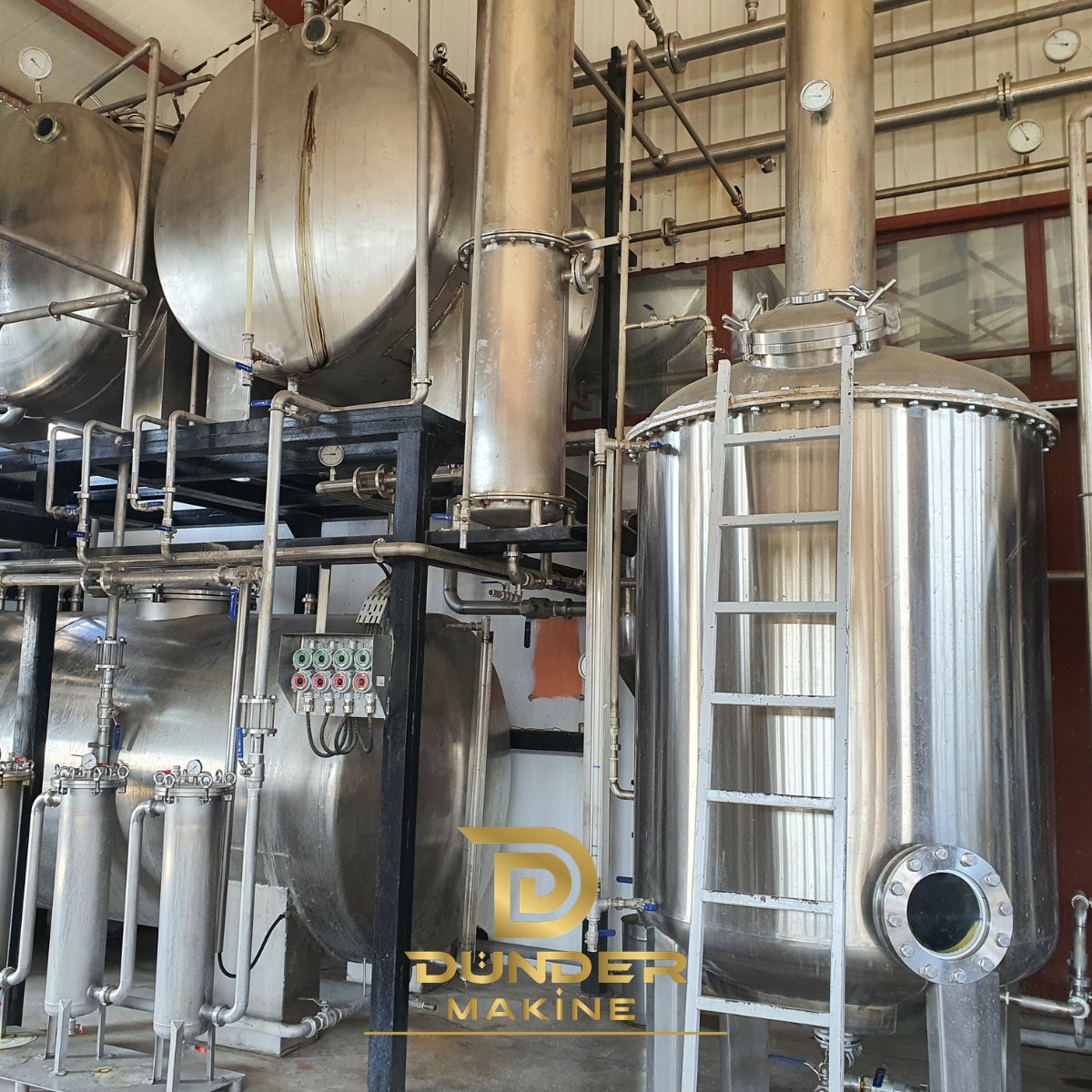
The tall vessel with a ladder and sight glass on the right is the turbo extractor. Behind it, horizontal stainless steel tanks store and collect the solvent. On the left, bag filters clean the extract before it moves on. Also, pipework on the steel frame links every stage.
Why turbo for rosemary extraction?
- Short batch time: high-speed mixing brings leaf and solvent into close contact.
- High yield: the mixer pulls more active compounds out of each batch.
- Low solvent use: there is less solvent to recover, store and buy.
In other words, turbo gives you more extract per hour with less solvent. That is why it suits dry leaves such as rosemary.
See a turbo extractor at work
This short video shows one of our turbo extraction systems during a run.
The rosemary extraction process
- First, dried rosemary leaves go into the turbo extractor.
- Then solvent goes in and the mixer runs at high speed.
- Next, the solution drains out to settle and pass through the filters.
- After that, the distiller and evaporator recover the solvent.
- Finally, you collect the concentrated rosemary extract.
Sizes and options
Our EKS-T turbo series covers 2,500 to 5,000 litres. In addition, you can compare it with rotary and static basket systems on our industrial extraction systems page.
In short, rosemary extraction with a turbo extractor gives you a fast, efficient and solvent-saving process. Therefore, it suits producers who supply food, cosmetic and supplement makers with steady volumes of extract.
FAQ
What is the difference between rosemary oil and rosemary extract? You make rosemary oil by distillation. The extract, on the other hand, comes from solvent extraction and also holds non-volatile compounds.
Can the same plant handle other herbs? Yes. The line works with many herbs, leaves and flowers.
Does the solvent go to waste? No. The line recovers it, so you can reuse it in the next batch.
Planning an extract plant? Contact us for a proposal.