When you distill plant material, not all of the oil ends up in the Florentine flask. Part of it stays dissolved in the water, the hydrosol. For valuable oils such as rose oil, that lost part is too important to throw away. That is why a cohobation unit belongs in every serious rose plant.
What is cohobation?
Cohobation means the redistillation of hydrosol after the main run. The hydrosol flows back into a dedicated still and heats up again. Then the dissolved compounds evaporate, condense and separate as a second oil.
In rose oil production, this “water oil” joins the first oil to make the final product. You can learn more about the product itself on the rose oil page.
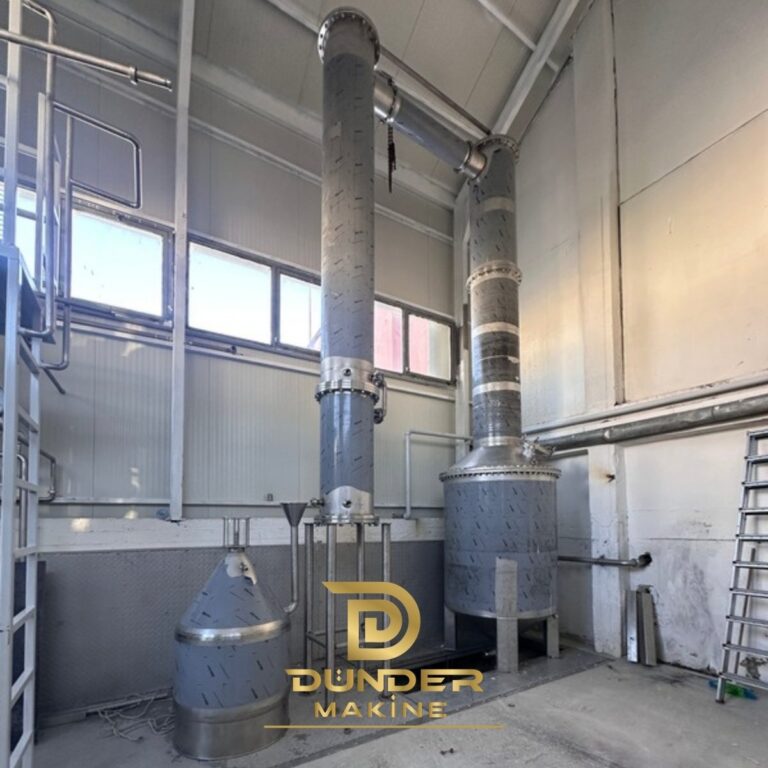
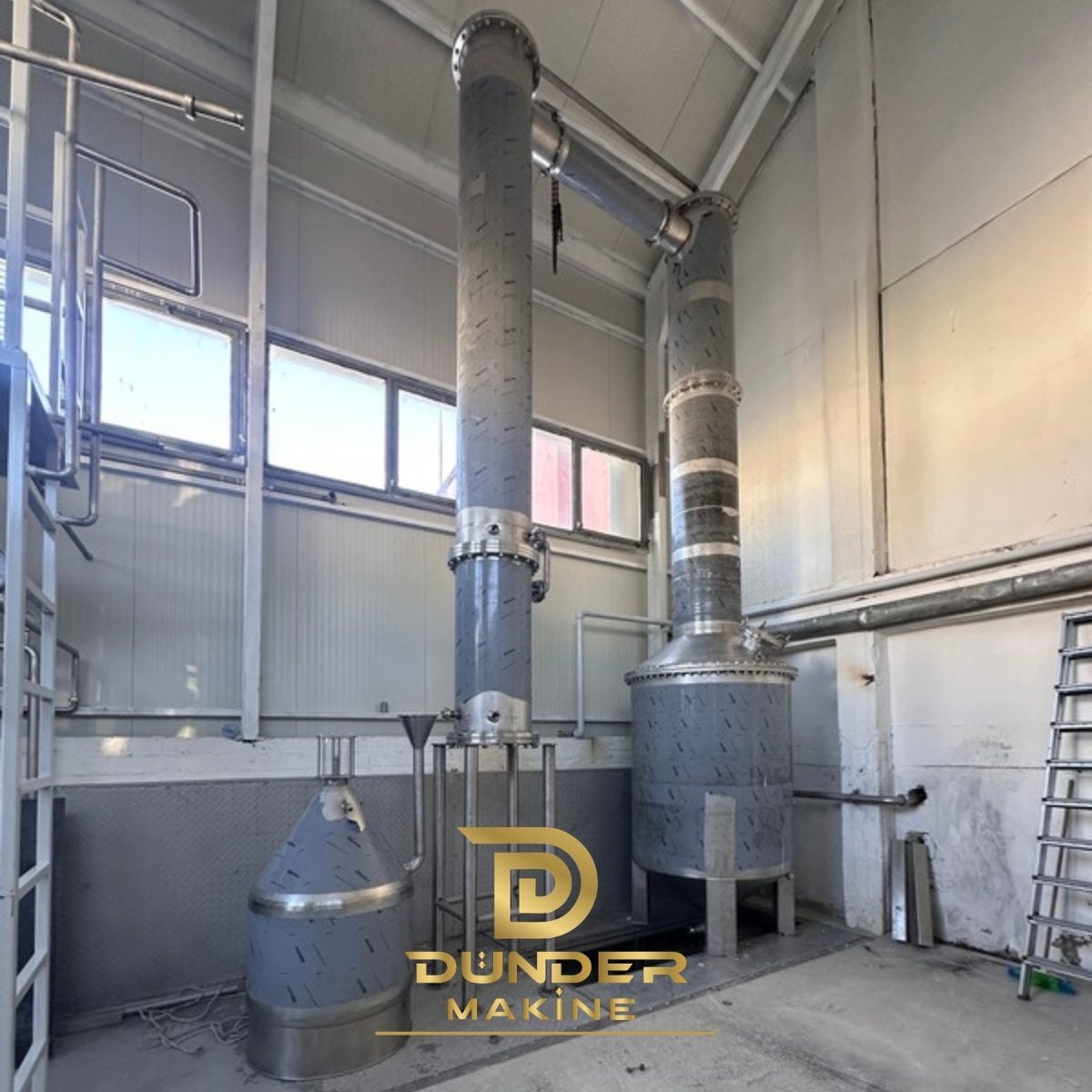
Inside the cohobation unit in the photo
This unit has a large stainless steel still with tall columns. The columns lead the vapour to the condenser. After that, a conical separator collects the recovered oil.
The tall columns matter. They give the vapour time to separate cleanly, so the oil comes out clear and rich.
Why it matters
- Higher yield: you recover oil that you would otherwise lose.
- Better hydrosol: the remaining rose water has a more balanced profile.
- Standard practice: rose oil plants in Isparta work with cohobation as a rule.
How a cohobation unit fits in a rose plant
In a typical plant, several copper stills run the main distillation. Meanwhile, their hydrosol flows into a buffer tank. The cohobation unit then takes the water from that tank and runs it continuously. As a result, the main stills never wait for the second step.
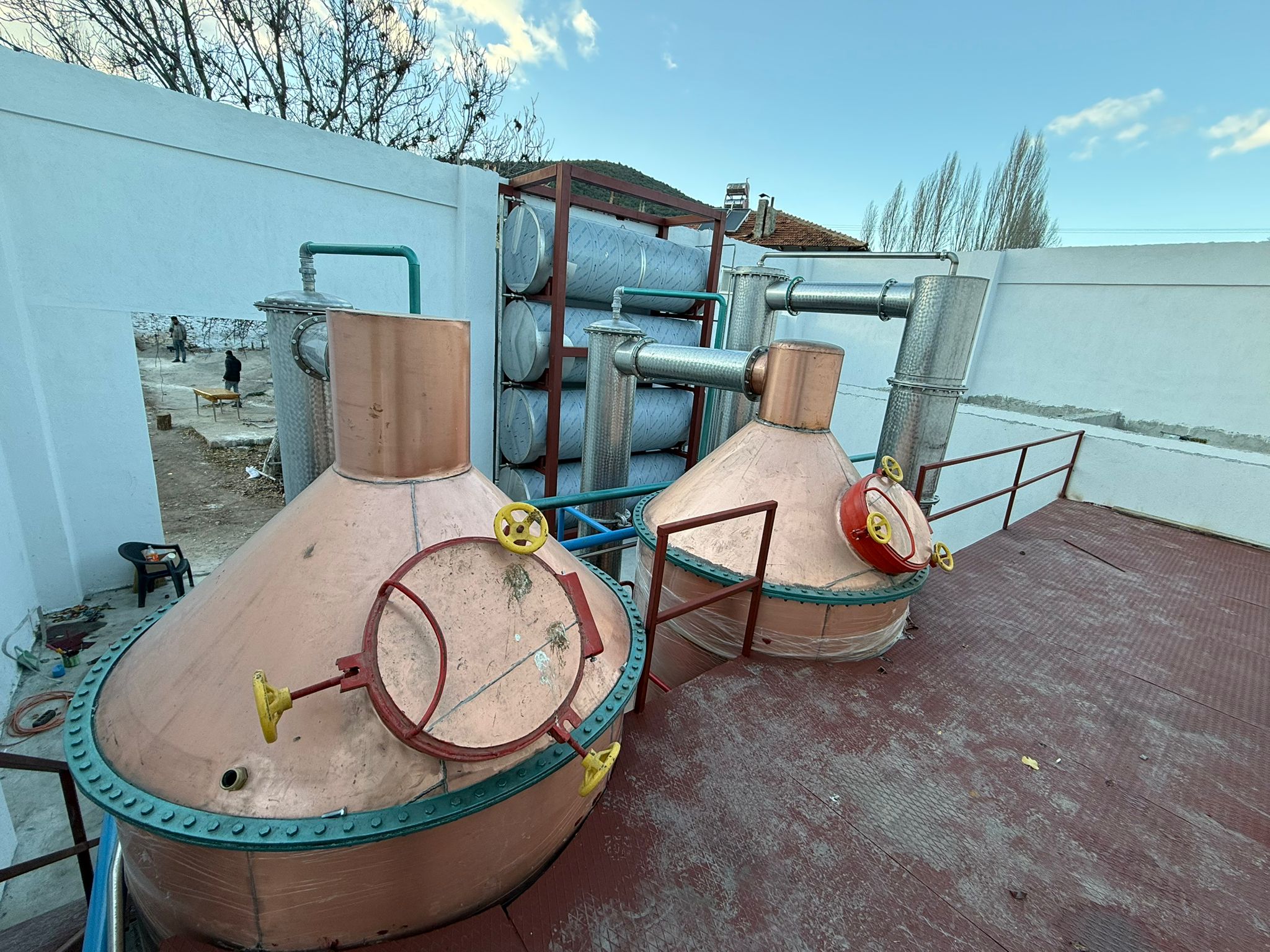
The plant above, for example, combines two copper stills with one cohobation system. You can see more on our cohobation systems page. Also, check how it pairs with our essential oil distillation units.
In short, a cohobation unit turns a by-product into profit. It pays for itself quickly in any plant that works with rose or other high-value flowers. Also, it gives you a cleaner hydrosol to sell.
Cohobation vessel on video
This video shows copper rose stills together with a Veronik cohobation vessel.
FAQ
Is cohobation only for rose? It is most common for rose. However, it helps with any plant whose oil partly dissolves in water.
Can I add a cohobation unit to an existing plant? Yes. It connects to the hydrosol line of your current stills.
How much extra oil can I expect? That depends on the plant. For rose, the water oil is a large share of the total yield.
Need a unit for your rose plant? Contact us.