Phenyl Ethyl Alcohol, also called 2-phenylethanol or PEA, is a valuable aroma compound. The fragrance, cosmetic, flavour and personal care industries use it widely. Because of its soft, rose-like scent, it appears in products from fine perfume to soap. A well designed Phenyl Ethyl Alcohol production unit turns the crude mixture into a pure, steady product.
PEA has the formula C₈H₁₀O and the CAS number 60-12-8. In industrial production, however, making the compound is not enough. You also need high purity, steady quality and an efficient process. That is why distillation and recovery play a central role. You can read more about the compound on the phenethyl alcohol page.
Why distillation matters in PEA production
After production, the crude mixture may still hold raw materials, solvents, by-products and compounds that boil at different points. A distillation system separates them by boiling point. Depending on the process, it can work at normal pressure or under vacuum.
A good system helps you to:
- Purify the Phenyl Ethyl Alcohol
- Remove unwanted components
- Recover solvents so that you can reuse them
- Keep the final quality steady
- Make the next steps easier, because the feed is cleaner
- Reduce product and raw material losses
Purity affects odour, colour, stability and how the product performs in a formula. Therefore, the operator must control temperature, pressure and flow with care.
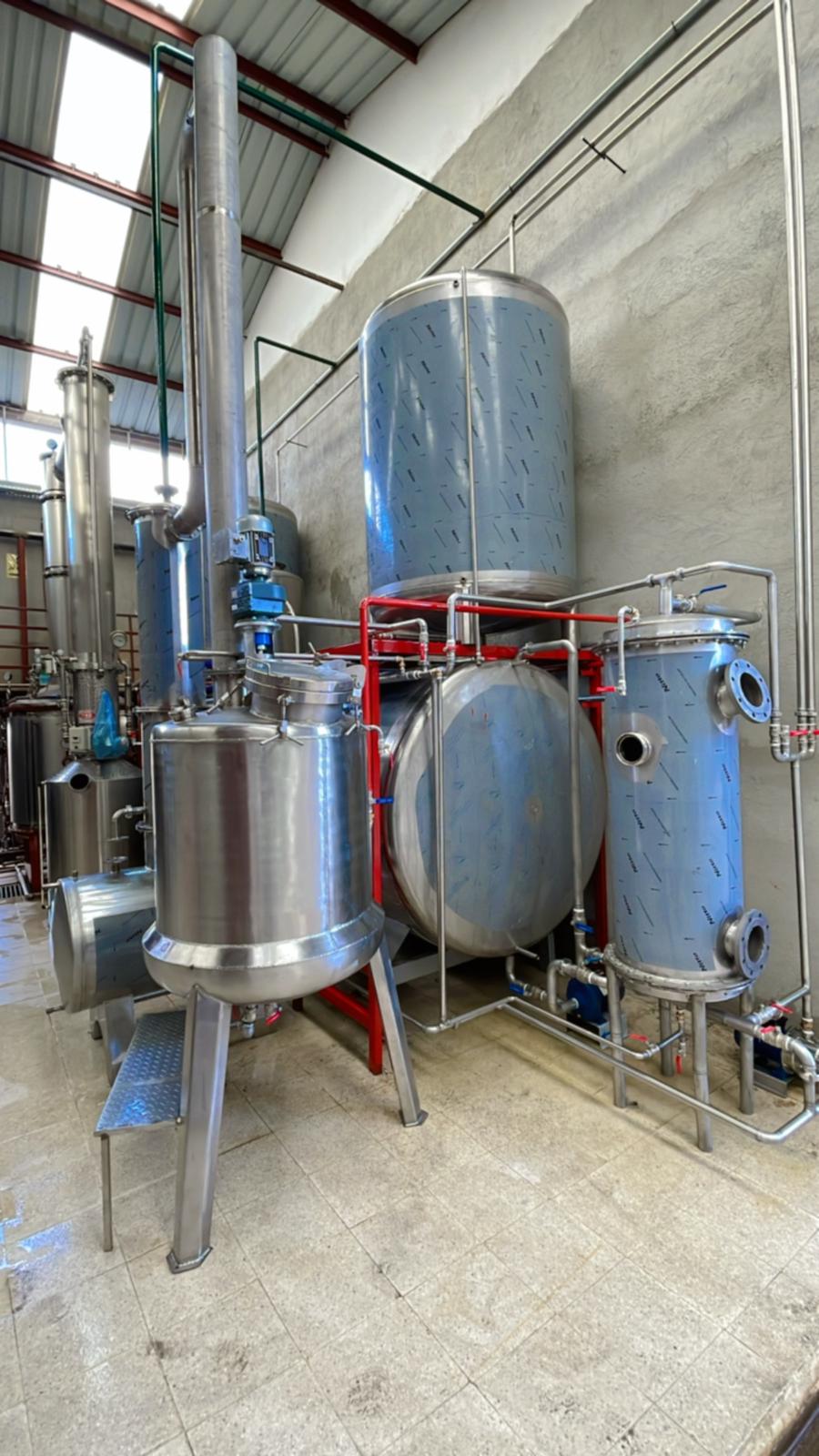
How the Phenyl Ethyl Alcohol production unit works
The exact setup depends on your method, feed, capacity and target quality. Still, a typical system follows these stages.
1. Feeding the crude mixture. First, the mixture from the reaction stage flows into the distillation unit. The operator sets the feed rate and temperature for the process.
2. Heating and evaporation. Next, the unit heats the mixture step by step. The lighter components turn to vapour first, while the heavier ones stay behind. In some projects, vacuum lowers the working temperature and protects the product from extra heat.
3. Condensation and fraction separation. Then a condenser turns the vapour back into liquid. After that, separate tanks collect the different fractions.
4. Solvent recovery. The system also separates solvents and other useful components for reuse. As a result, you use less raw material, create less waste and cut costs.
5. Final product collection. Finally, once the PEA meets the target quality, it moves to a product tank or the next stage.
Advantages of an integrated recovery system
A good distillation and recovery system does more than separate the product. In addition, it makes the whole plant more efficient and easier to control. Its main benefits are:
- Reuse of valuable process components
- Lower raw material use
- Fewer product losses
- Less waste, so lower disposal costs
- Steadier batch quality
- Better process monitoring and safety
- Energy savings, for example through heat recovery
- Lower total production cost
Of course, real results depend on your feed, your recipe and the design of the system.
Where PEA from a Phenyl Ethyl Alcohol production unit goes
Thanks to its floral scent and useful properties, PEA serves many industries:
- Perfume and fragrance
- Cosmetics and personal care
- Soap and detergents
- Household cleaners
- Flavour blends
- Chemical synthesis and special formulas
- Preservative systems, within the rules that apply
So you should choose the purity grade to match the end product and the relevant rules.
Why a custom Phenyl Ethyl Alcohol production unit?
Every PEA plant has its own needs for capacity, feed, purity, automation and recovery. For this reason, we design each unit around real process data instead of a standard model. Key design points include:
- First of all, hourly or daily capacity
- Feed composition
- Target purity
- Working temperature and pressure
- Components to recover
- Heating and cooling needs
- Material and seal compatibility
- Automation and control
- Access for cleaning, as well as maintenance
- Plant safety
In the end, a good Phenyl Ethyl Alcohol production unit balances cost, quality, energy use and ease of operation.
The Dünder Makine Phenyl Ethyl Alcohol production unit
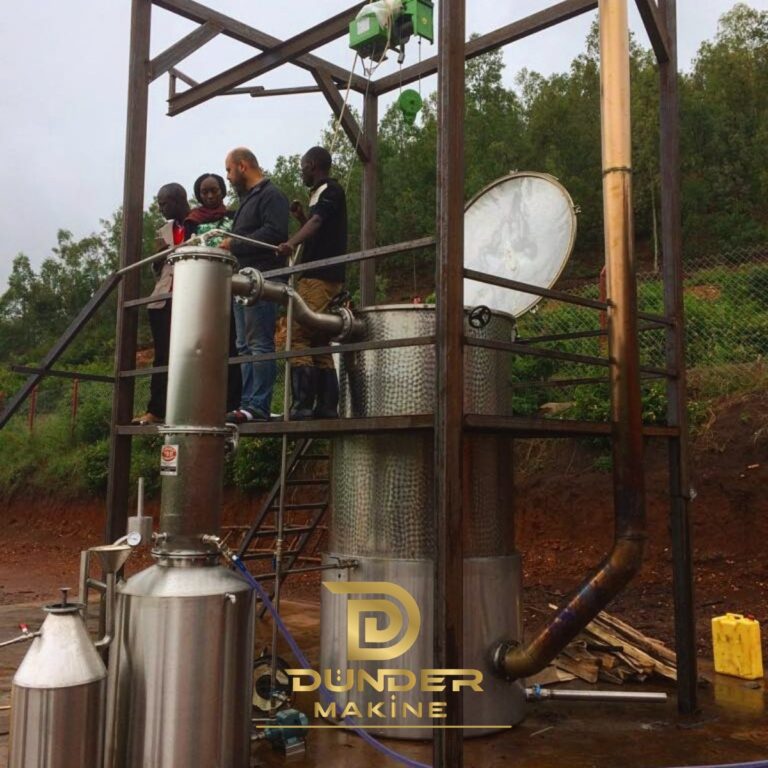
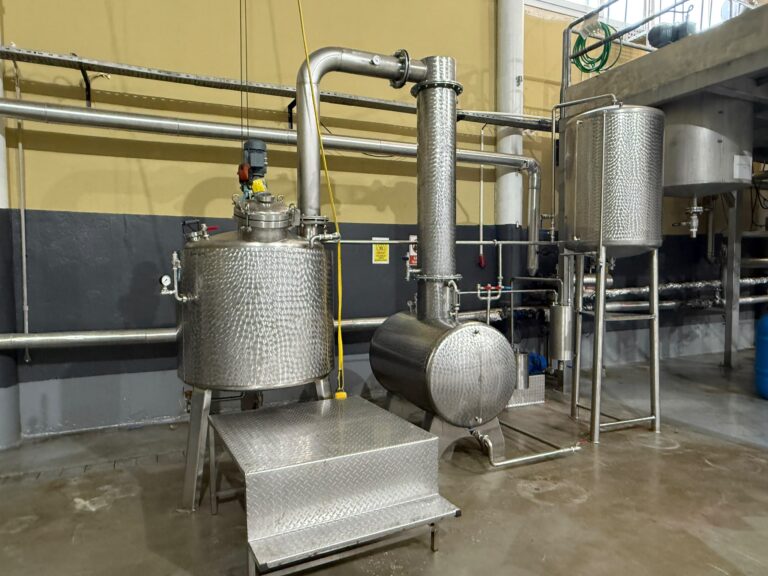
Specifically, our unit combines distillation, condensation, product collection and recovery to fit each project. We can configure the stainless steel vessels, tanks, condensers, piping, controls and automation to your capacity. See our PEA production system page for more details.
Watch the unit in operation:
The ADS series adsorption unit recovers phenethyl alcohol (PEA) from rose water using activated carbon or zeolite columns:
Conclusion
In short, a well engineered distillation system keeps PEA quality high, raises recovery and gives you reliable control. We develop project-specific solutions for industrial plants. Contact our team to discuss the capacity, automation and equipment your project needs.