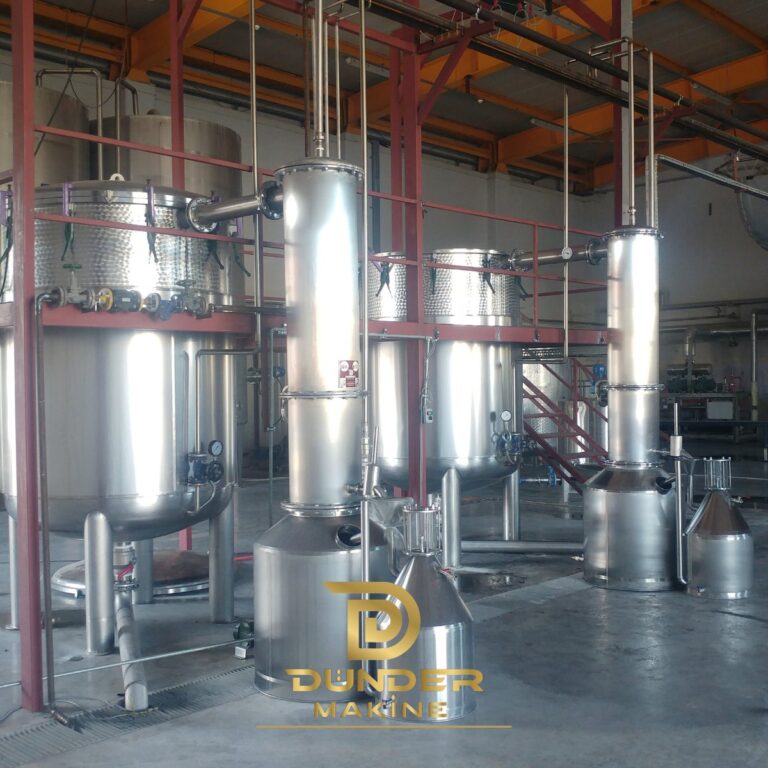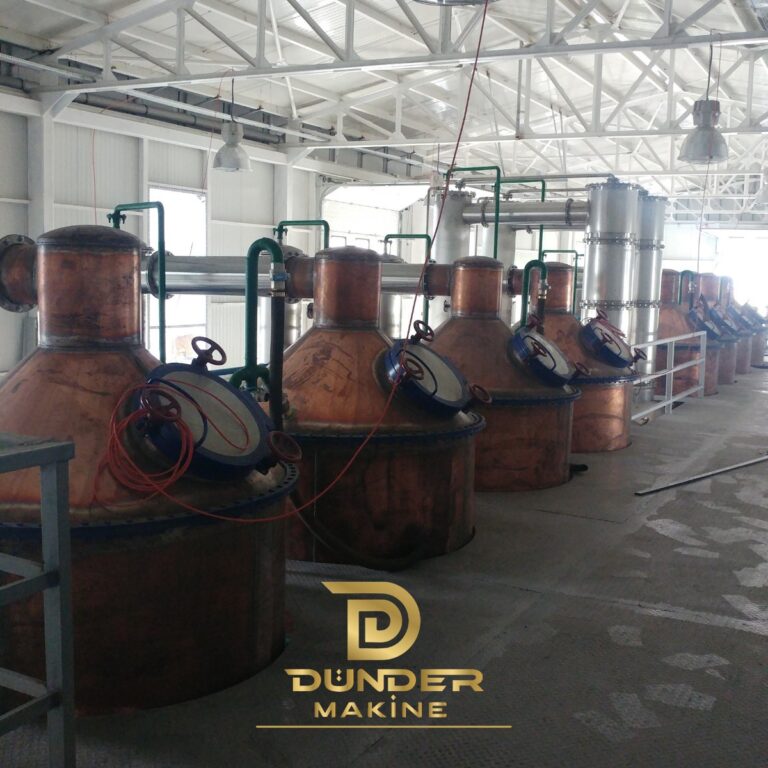
In essential oil and botanical extract production, the extractor is where you win or lose yield. A rotary extractor solves one of the oldest problems in solvent extraction. It keeps the plant material in constant, even contact with the solvent. So the material cannot settle into a packed bed at the bottom of the vessel.
What is a rotary extractor?
It is a closed stainless steel vessel that turns during the extraction cycle. Instead of an agitator stirring a still load, the whole vessel rotates. As a result, the plant material tumbles through the solvent and shows fresh surfaces all the time.
We build our rotary extractors as the EKS-R series. In addition, we make static (EKS-S) and turbo (EKS-T) systems. All three come as complete lines with the same equipment after the extractor. What changes is how the solvent meets the plant. That one difference drives cycle time, yield, running cost and maintenance.
How the process works
- Preparation: first, you weigh the plant, dry or use it fresh, grind it and load it. Then you set the solvent volume for the load.
- Mixing: next, the solvent goes in, the drum starts turning and the operator sets temperature and pressure.
- Settling: after that, the mixture rests so solids and liquid part by gravity.
- Filtration: then a stainless steel filter removes the solids.
- Vacuum filtration: a second filter under vacuum takes out the fine particles.
- Solvent removal: the distiller strips the solvent and recovers it for reuse.
- Evaporation: finally, the evaporator concentrates the product under vacuum and leaves the concrete or extract.
Why a rotary extractor improves yield
Better contact. In a static vessel, the material packs down. Then the solvent finds channels and leaves some pockets almost untouched. Rotation stops that, so the extraction stays even across the whole load.
High yield at medium cycle times. Rotary extraction sits between the other two methods. It is slower than turbo but much faster than static, and it gives a high yield. That is why it is the usual choice for medium and large plants.
Higher cost and more maintenance. On the other hand, a turning vessel has drives and seals that a static tank does not. So both the price and the service work are higher, and a fair plan should count that from the start.
Rotary, static or turbo?
The right method depends on your scale, your budget and how much solvent and energy you want to use. The table compares our three systems.
| Feature | Static (EKS-S) | Rotary (EKS-R) | Turbo (EKS-T) |
|---|---|---|---|
| Principle | Long, steady contact | Rotating drum | High-speed mixing |
| Extraction time | Long | Medium | Short |
| Efficiency | Medium | High | Highest |
| Capacity | Small to medium | Medium to large | Small to medium |
| Energy use | Low | Medium | High |
| Investment | Low | High | Medium |
| Maintenance | Easy | Demanding | Medium |
| Automation | All three suit full automation | ||
If you need high output at large volumes, the rotary design is the strongest option. However, if solvent and energy savings matter more, compare it with turbo. And if you start small on a tight budget, static extraction is still a reliable entry point.
Typical applications
- Rose concrete from Rosa damascena
- Jasmine, tuberose and other delicate flowers that heat would damage
- Oleoresins from spices and seeds
- Herbal extracts for pharmaceutical and cosmetic use
Where the rotary extractor fits in a plant
The extractor rarely works alone. It sits between raw material handling and the stages that turn a crude extract into a finished product. In a full line, it works with a condenser column and a solvent recovery circuit. Also, if you want absolute, it connects to an absolute production system for the alcohol wash and chilling.
You can compare all three methods on our industrial extraction systems page. For the science behind it, see this overview of extraction.
Materials and construction
We build the vessels from stainless steel throughout. Solvents, plant acids and frequent cleaning would soon find any weak spot in a lesser metal. Moreover, we grind and polish every weld so no residue stays at the joints. Finally, every connection on the solvent circuit meets the standard for flammable service.
Technical specifications
The EKS-R series comes in two standard models. Of course, we can adapt both to your needs.
| Feature | EKS-R 250 | EKS-R 500 |
|---|---|---|
| Capacity | 2,500 L | 4,000 L |
| Material | AISI 304 / 316 stainless steel | |
| Heating | Direct or indirect steam | |
| Cooling | Tubular or serpentine | |
| Motor power | 2.2 kW | 4 kW |
| Operating pressure | 0.5 to 1 bar | |
| Evaporator | 250 L | 300 L |
What a complete line includes
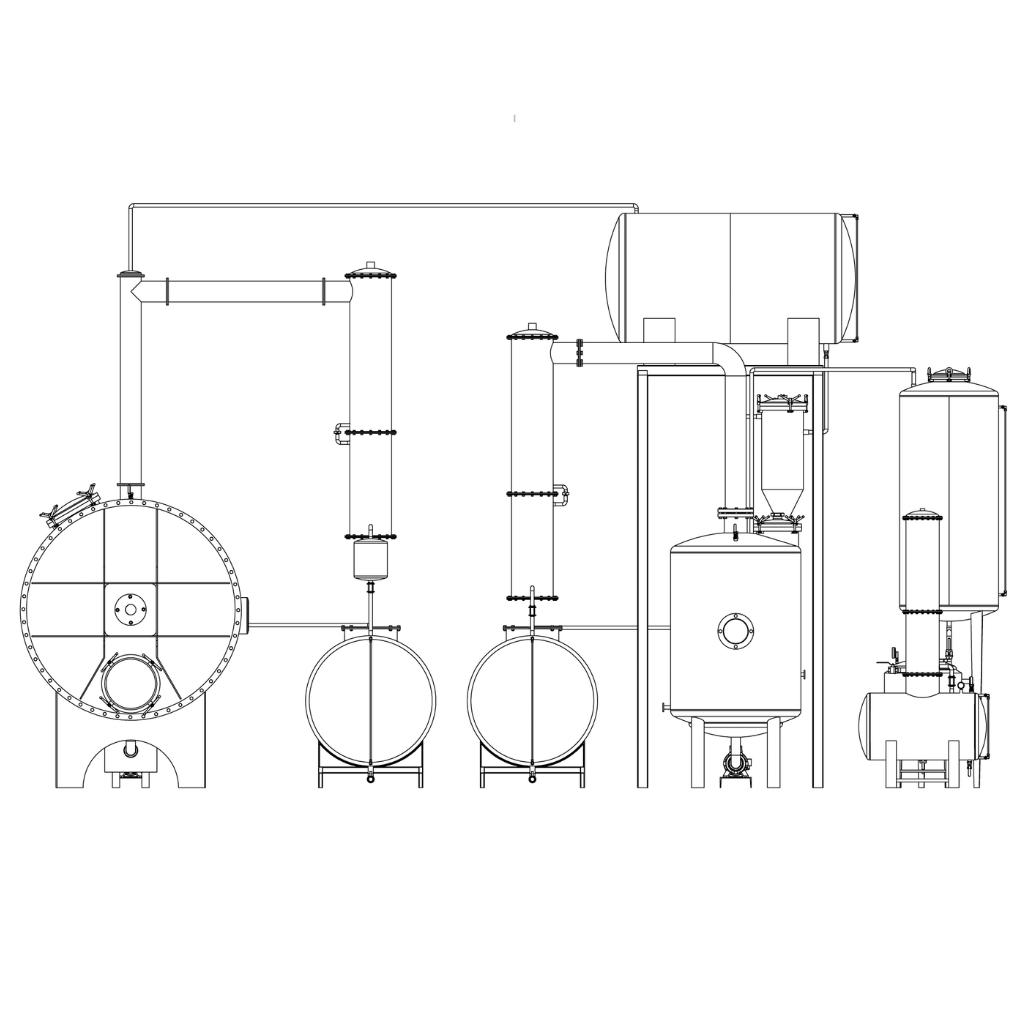
The extractor is one station in a closed circuit. A full Dünder Makine rotary line includes:
- Rotary extractor and its cooling heat exchanger
- Horizontal solvent collection tanks
- Stainless steel filter
- Transfer pumps
- Horizontal and vertical settling tanks
- Decanter
- Distiller with condenser
- Evaporator with its own heat exchanger
Because the circuit is closed, the solvent condenses and returns instead of escaping. That keeps your cost per kilogram of raw material under control.
See the rotary extractor in operation
Talk to our engineers
Every raw material behaves differently. So the right setup depends on your plant, your batch volume and your solvent. Tell us what you process and how much, and we will propose a setup. Contact us to discuss your project.