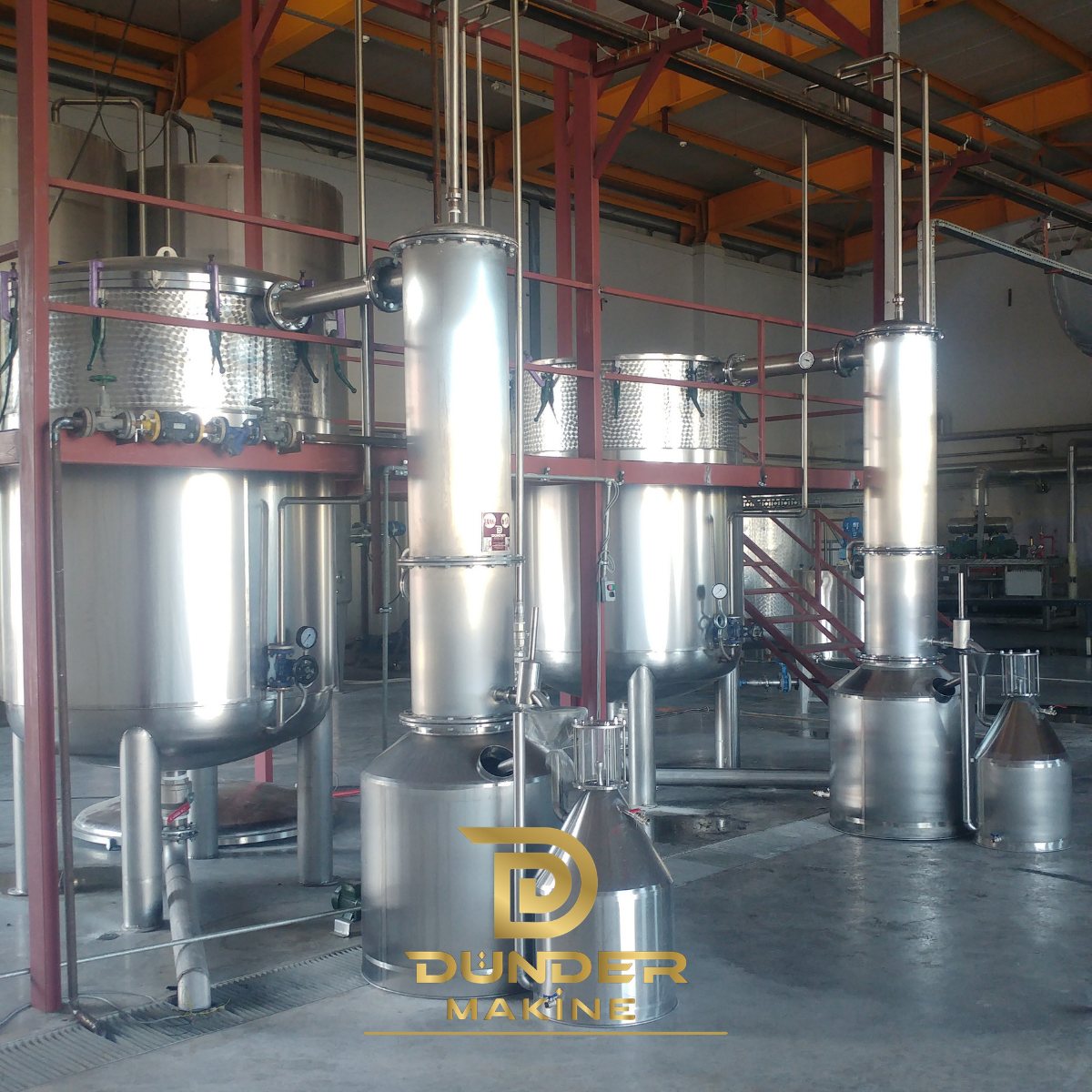
Steam and water distillation is a smart middle way for essential oil producers. Pure steam distillation and pure water distillation each have strengths, and this method combines them. The industrial plant in the photo shows how it works at full scale.
How steam and water distillation works
First, the operator loads the plant material into the still, above or partly in water. Then steam from an external generator passes straight through the plant bed. At the same time, heating coils inside the still raise the water temperature. As a result, the heat stays balanced and easy to control.
The steam carries the oil to the condenser. After that, the oil and the water separate in the Florentine flask. You can read more about the basic principle in this overview of steam distillation.
What you see in the photo
- Stills on a steel platform: large stainless steel stills with hammered tops. Workers feed them from the platform above.
- Tall columns: they lead the vapour to the condensers.
- Florentine flasks: conical separators at floor level where oil and hydrosol part ways.
- Valve manifolds: they control the steam, water and drain lines for each still.
Why choose steam and water distillation?
Some plants pack tightly under pure steam. In that case, the steam finds a short path and leaves part of the oil behind. With steam and water distillation, the warm water softens the plant and helps the steam reach every part of it. Therefore, the yield is often higher and more even.
In addition, the method protects the aroma. The plant never sits on a hot dry surface, so it does not burn. This is why many producers use it for herbs, leaves and peels.
Typical raw materials
- Leaves and herbs that pack densely, such as laurel and mint
- Citrus peels and other moist materials
- Plants where a balanced aroma profile matters
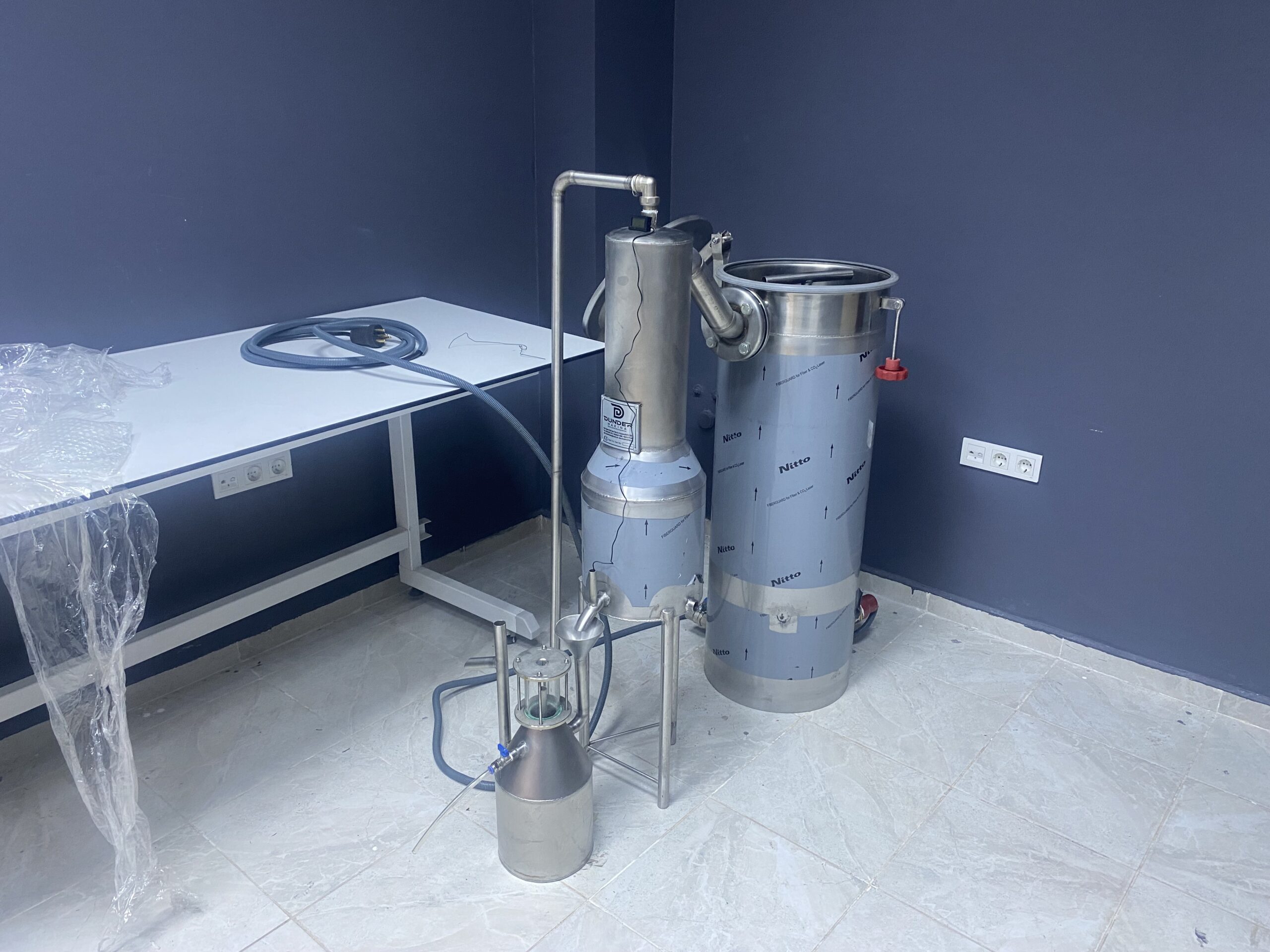
For example, the bitter orange plant below works on the same idea. It handles fresh peel in large batches.
Steam and water distillation with the HBI series
Our HBI series comes in sizes from 500 to 5,000 litres. Each unit has its own coil, column, condenser and separator, so you can run several stills side by side. Also, you can compare all methods on our essential oil distillation units page.
In short, steam and water distillation gives you the yield of water distillation and the control of steam. So it is a safe choice for dense herbs, leaves and peels.
Watch a water and steam still
This video shows a 3,500 litre water and steam distillation unit.
FAQ
How is it different from steam distillation? Steam distillation uses only external steam. This method also heats the water in the still with coils.
Which heat source do I need? You need an external steam generator or boiler. It can run on natural gas, fuel oil or a similar fuel.
Can one plant handle several crops? Yes. You only change the load and the run time for each crop.
Planning a new plant? Contact us and we will size it for your raw material.