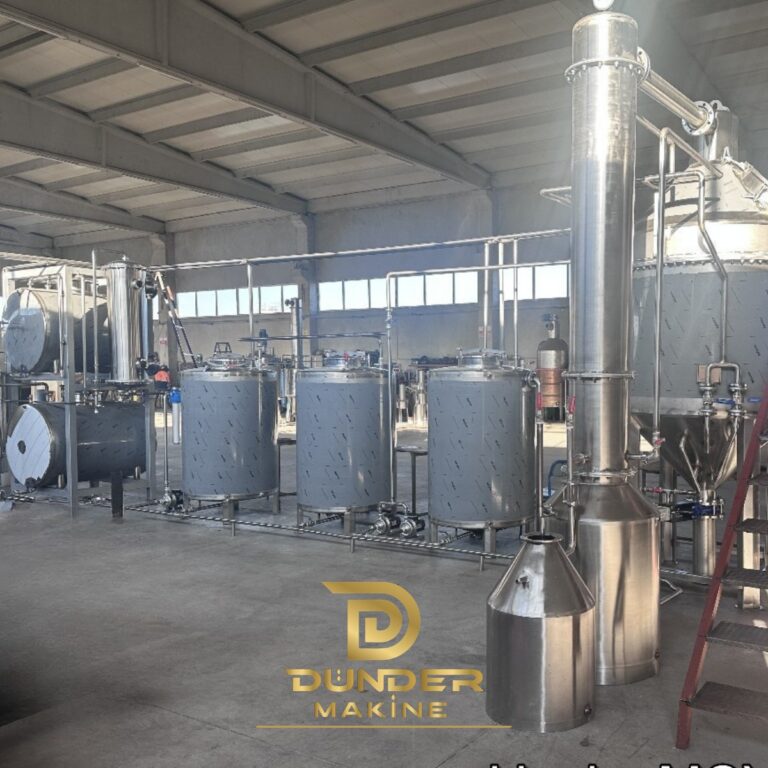
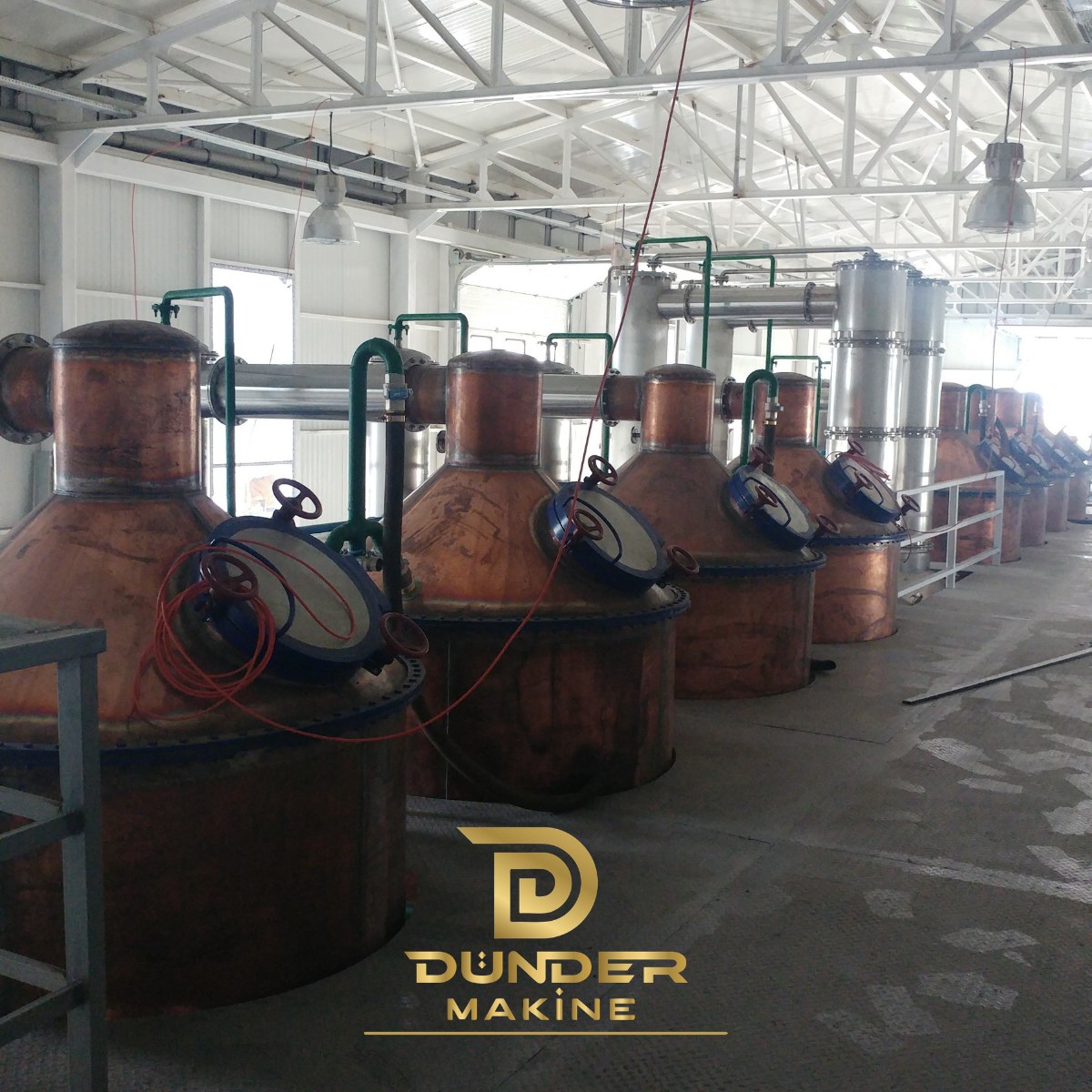
The rose harvest is short and intense. Every morning, tonnes of fresh petals arrive and must go into the stills within hours. That is why a rose oil plant often looks like this one: a long row of copper stills, all ready to work at the same time.
What you see in the photo
The copper stills stand in a line on the floor of a bright hall. Each one has a large round manhole with a hand wheel, so the team can load petals fast. Then a stainless steel pipe carries the vapour from each still to the condensers in the back. Also, green water lines feed every unit.
Why a row layout in a rose oil plant?
- Speed: the team moves along the row and loads one still after another.
- Simple flow: shared pipes keep the routes short and clean.
- Easy control: the operator sees every still from one place.
How the rose oil plant works
First, workers fill each still with petals and water. Then heat brings the water to the boil. Next, the vapour carries the rose oil to the condenser. After that, oil and rose water separate in the Florentine flasks. Finally, a cohobation unit can redistill the rose water to recover more oil.
You can read more about the product on the rose oil page.
Planning capacity
We size a plant by the daily petal volume at peak harvest. For example, if you receive many tonnes per day, you need enough stills to process them before noon. Therefore, we plan the number of stills, the condensers and the steam supply together.
In short, a good rose oil plant keeps pace with the harvest. See our cohobation systems and distillation units.
FAQ
Why copper? Copper spreads heat evenly and gives a clean rose oil.
How many stills do I need? That depends on your daily petal volume. So send us your harvest data and we will calculate it.
Planning a rose plant? Contact us.