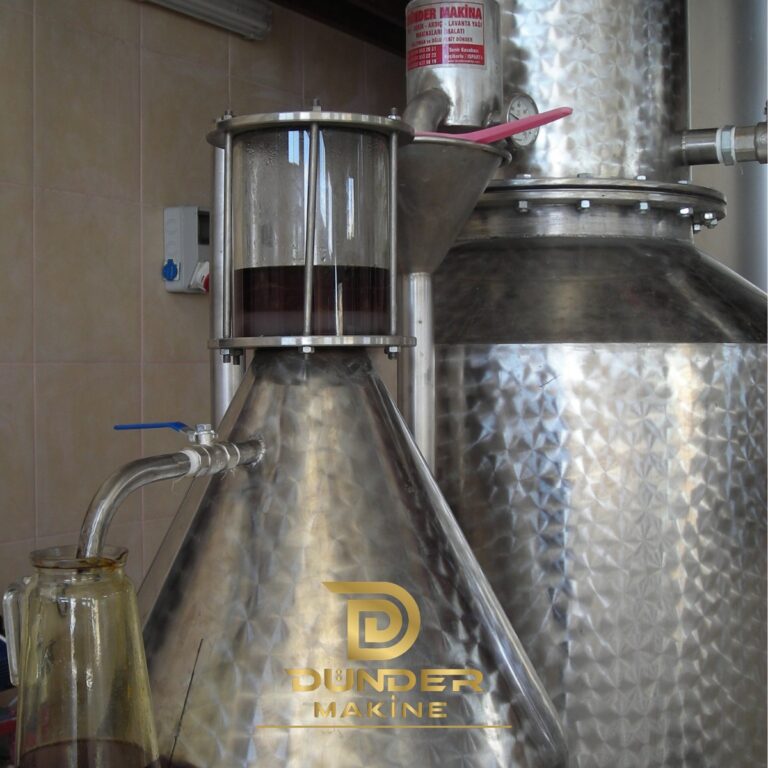
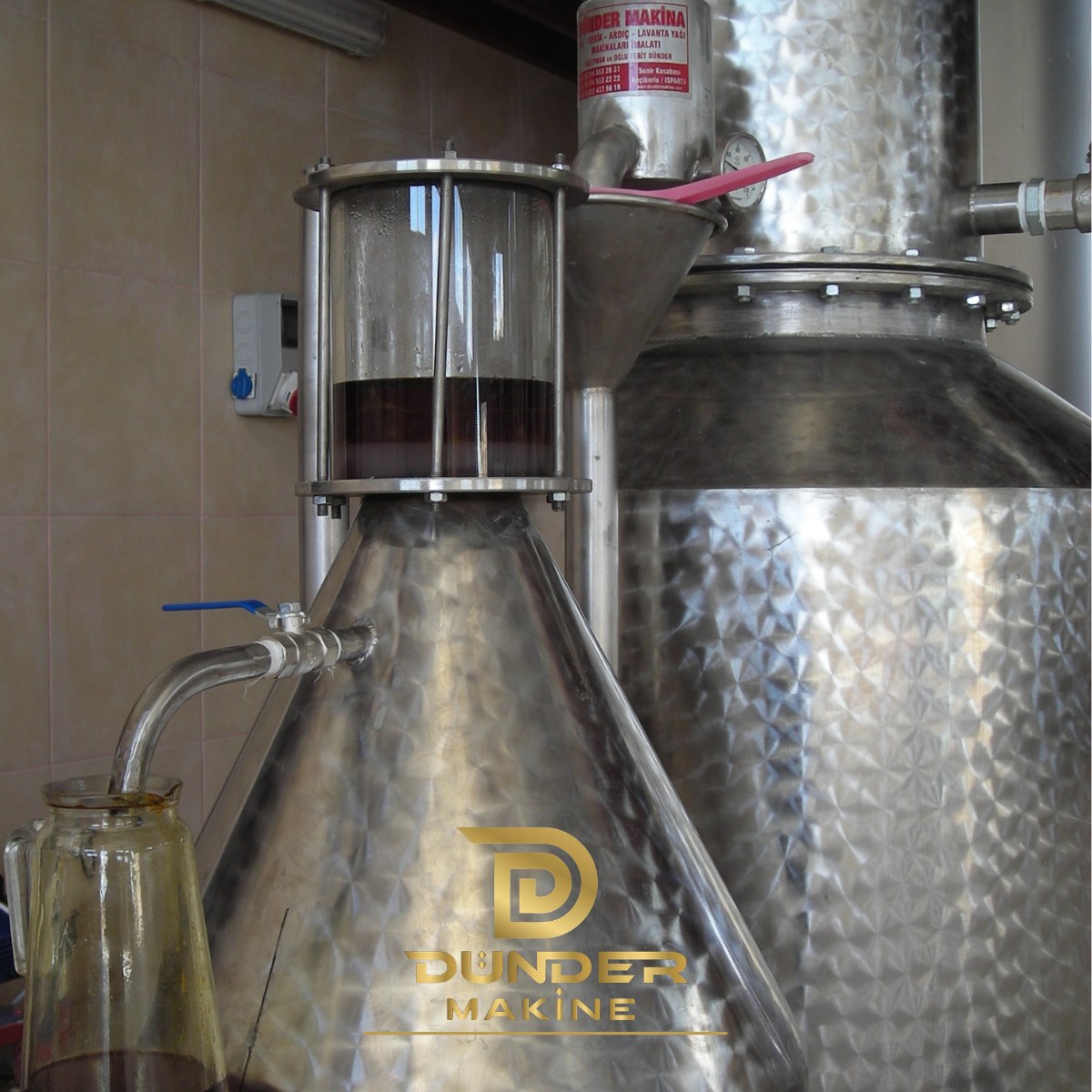
Every drop of essential oil from a still passes through one simple vessel: the Florentine separator. This photo shows one of our earlier units at work. The sight glass on top is full of distillate, and a glass jug below collects the oil.
What you see in the photo
The conical body sits next to the still. On top, a clear glass cylinder lets the operator see the oil layer. Then a funnel brings the cooled distillate in from the condenser. Also, a small valve and a pipe on the side lead the oil into the jug.
How a Florentine separator works
Oil and water do not mix. So when the distillate enters the vessel, it slowly splits into two layers. Most essential oils are lighter than water, so they float on top. Then the water leaves from a lower outlet, while the oil stays and collects in the upper part.
The idea is centuries old. You can read about its history on the Florentine flask page.
Design details of a good Florentine separator
- Sight glass: the operator sees the oil layer and knows when to draw it off.
- Calm inlet: the funnel slows the flow, so the layers stay clean.
- Right volume: a larger body gives the oil more time to separate.
- Two outlets: one for oil, one for hydrosol.
Light and heavy oils
Most oils float. However, a few oils, such as clove or cinnamon, are heavier than water. For those, we build separators with the oil outlet at the bottom.
In short, a well made Florentine separator gives you clean oil and clear hydrosol from every batch. See the full units on our essential oil distillation units page.
FAQ
What happens to the water? It is the hydrosol, and you can sell it or send it to a cohobation unit.
Which material do you use? Stainless steel for the body and glass for the sight cylinder.
Need a separator for your still? Contact us.