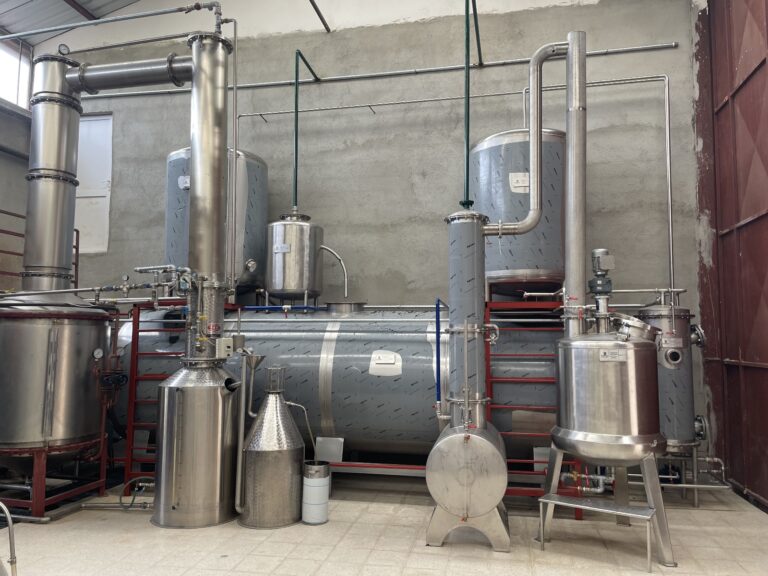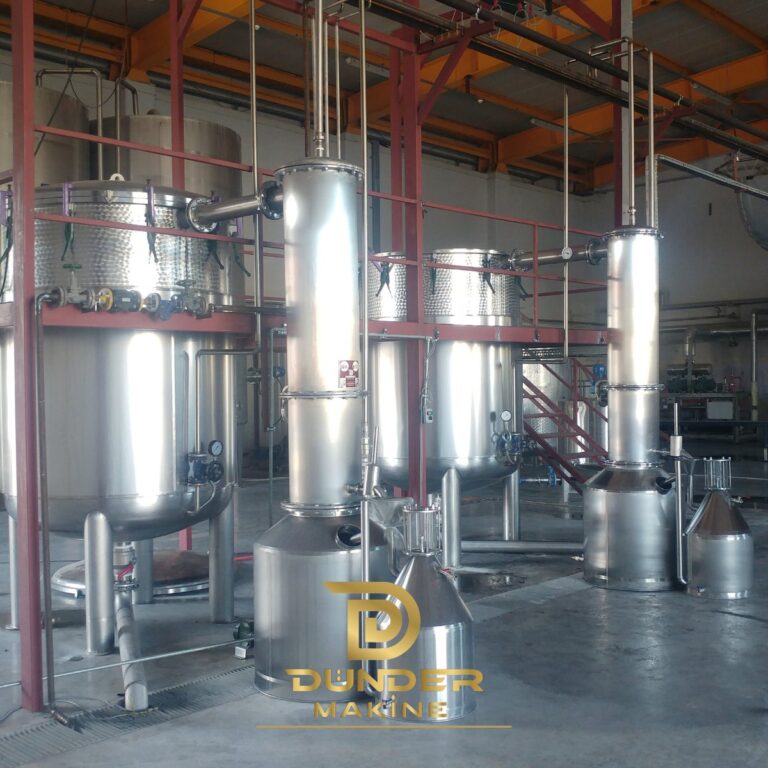
A Rosa damascena processing plant must bring together every stage that makes rose oil, rose concrete and rose absolute. Flower reception, distillation, extraction, filtration, solvent recovery and storage all have to work as one system. The facility we delivered in Bulgaria shows this approach. It combines copper and stainless steel equipment, piping, platforms and support units for delicate rose flowers.
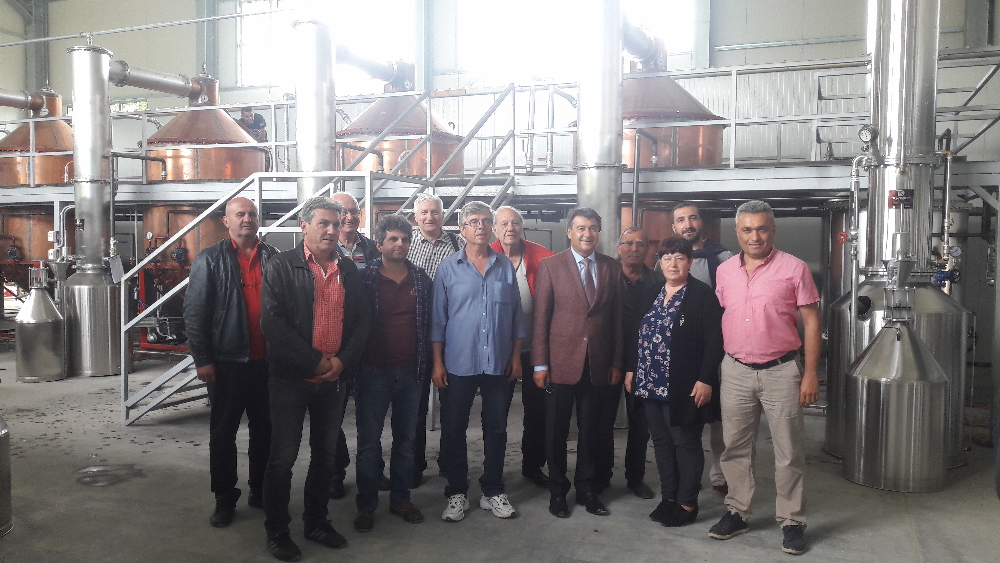
In short, rose oil comes from water or steam distillation. Rose concrete, on the other hand, comes from solvent extraction and holds both aroma and natural wax. Finally, rose absolute starts from concrete. The producer mixes it with ethanol, cools and filters it, and then recovers the solvent.
Why Bulgaria and Rosa damascena matter
Bulgaria has a long tradition of growing Damask rose and making rose oil, so a modern Rosa damascena processing plant fits well there. In 2014, the European Union registered “Bulgarsko rozovo maslo” as a Protected Geographical Indication. The definition covers an essential oil from the steam distillation of Damask rose flowers. Only products that meet the origin and production rules may use this name.
Fresh flowers suffer from any delay after harvest. Therefore, fast reception, careful loading and quick processing are vital. When we size a plant, we look at daily flower volume, harvest length, shifts, energy, cooling water, storage and target products. The goal is steady processing that keeps the aroma intact.
How a Rosa damascena processing plant makes rose oil
First, the operator loads the flowers into a still for water distillation, steam distillation or a mix of both. Then heat releases the aroma compounds, and the vapour carries them to a condenser. Next, the cooled liquid flows into a Florentine separator. There, oil and rose water part by density. You can read more about the product on the rose oil page.
Good results depend on even steam flow, the right time and temperature, enough condenser capacity, clean piping and good separation. In addition, a cohobation unit can redistill the rose water and recover more oil. So we set the recipe for each flower type and each plant setup.
What is rose concrete?
Rose concrete comes from solvent extraction instead of distillation. A solvent dissolves the fragrance compounds from the flowers. After that, the line filters the mixture and recovers the solvent under vacuum at low temperature. What remains is a semi-solid concrete with aroma molecules, natural floral wax and other oil-soluble parts.
A typical line has an extractor, filters, heat exchangers, tanks, pumps, vacuum equipment and an evaporator. We choose static, rotary or turbo extraction based on capacity, cycle time, solvent use, automation and flower type. Also, a closed solvent loop saves money and keeps the workplace safe.
How rose absolute is made
In a Rosa damascena processing plant, concrete is the starting point for absolute. First, it dissolves in ethanol. Then the solution cools so that the waxes separate, and a filter removes them. Finally, the evaporator recovers the ethanol under vacuum. As a result, a fluid and highly concentrated rose absolute remains.
An absolute line can include mixing, settling and filter tanks, cooling units, heat exchangers, alcohol tanks, pumps and an evaporator. Material choice, temperature control, sealing, easy cleaning and solvent handling all matter. Of course, final quality also depends on the flowers, the recipe, the staff and lab testing.
The difference between the three products
Rose oil is an essential oil from distillation. By contrast, concrete comes from solvent extraction and, because it holds wax, it is dense or semi-solid. Absolute, in turn, is refined concrete and serves as an intense fragrance in perfumery and cosmetics. Since the terms are not interchangeable, you should define your markets and specifications early.
Our approach to this Rosa damascena processing plant
Dünder Makine combines decades of manufacturing with engineering for aromatic plants. Our range includes rose distillation systems, static, rotary and turbo extractors, absolute lines, and cohobation equipment. Moreover, we build in AISI 304/316 stainless steel and copper to suit capacity, process and site.
A good plant needs more than machines. It needs process calculations, layout planning, manufacturing, installation, start-up, operator training and after-sales support. That way, the aroma of the rose becomes a controlled, repeatable and scalable process.
Before engineering starts, we review raw material data, quality targets, rules, solvent storage, explosion protection and waste handling. Also, if you want to process other plants outside the rose season, we plan for cleaning and multipurpose use. See our distillation units and absolute extraction plants.
The Bulgarian plant on video
This video shows the Rosa damascena rose oil distillation plant in Bulgaria.
FAQ about a Rosa damascena processing plant
Are rose oil and rose absolute the same product? No. Rose oil comes from distillation. Rose absolute, however, starts as concrete from solvent extraction and then goes through ethanol, cooling, filtering and solvent recovery.
Can you use rose concrete directly? That depends on your product. Rose concrete holds natural wax, but perfumers and cosmetic makers still use it. It is also the starting material for rose absolute.
Can one facility make all three products? Yes. However, distillation and solvent extraction need different equipment, utilities and safety measures. So a detailed engineering study must plan the shared and separate parts.
How do you set the capacity? We look at daily flower volume, harvest schedule, target products, cycle time, shifts, energy and cooling, storage, automation and future growth.
Planning a Rosa damascena processing plant? Share your flower volume, target products and site details with us, and contact our team.