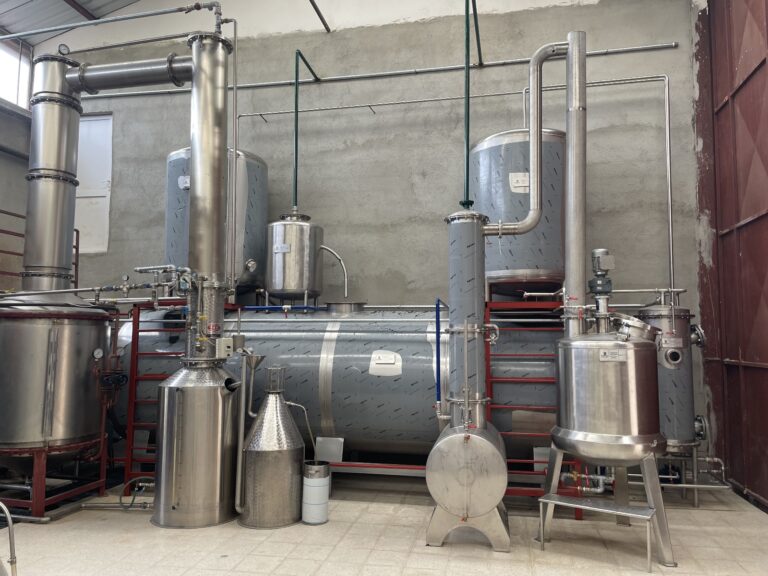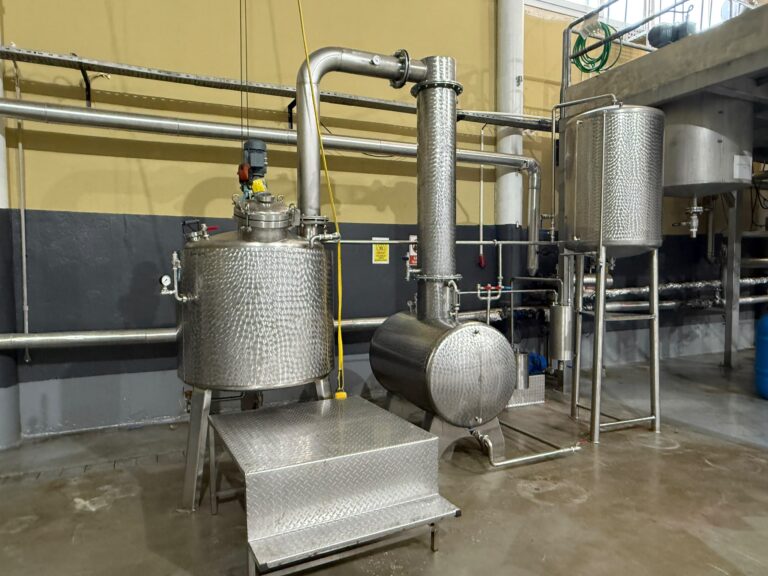
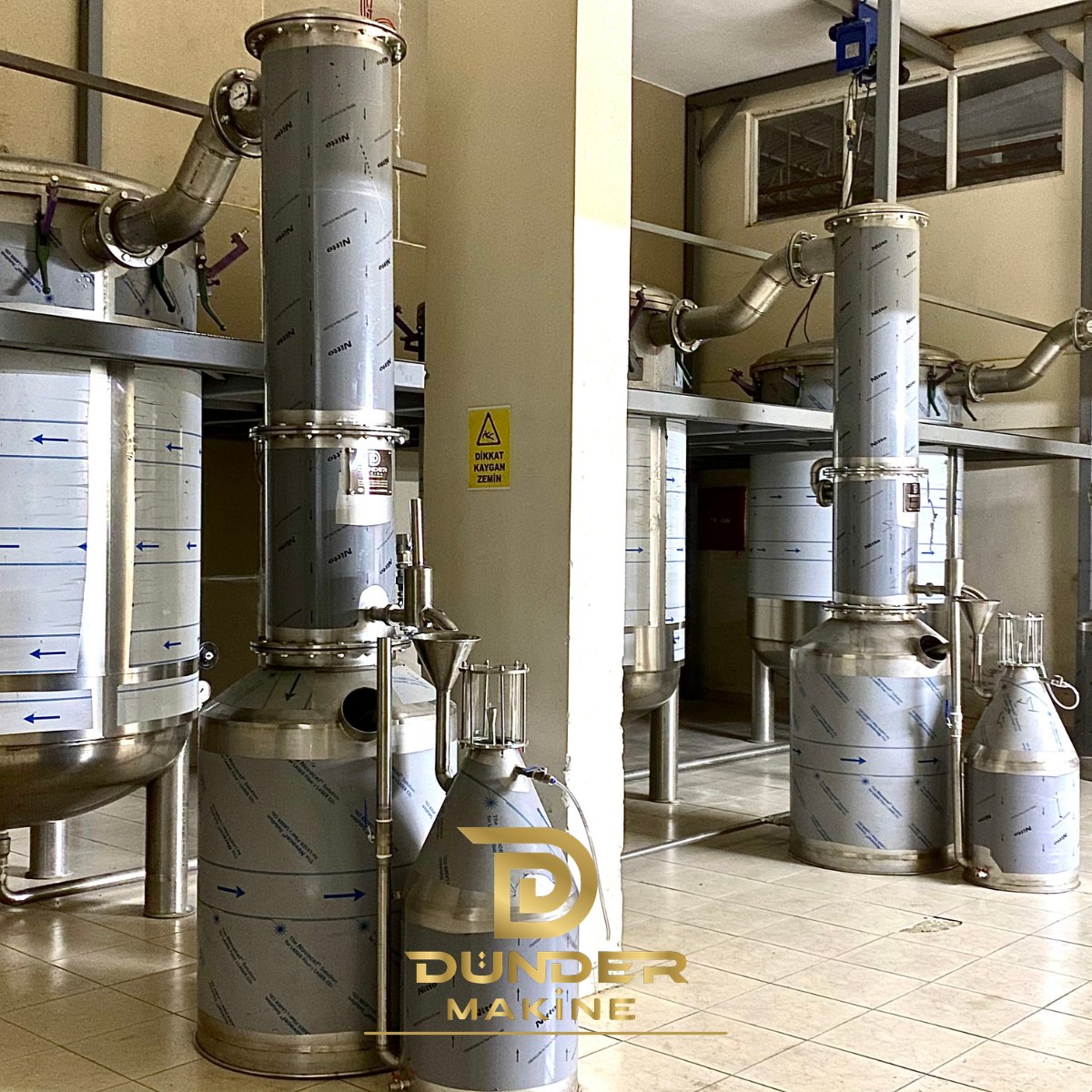
This photo shows two steam distillation unit lines, still wrapped in their protective film after installation. Each line has its own still on the platform above, a tall condenser column and a Florentine separator on the floor. Together, they form a simple and flexible plant.
What you see in the photo
The stills sit on a steel platform, so workers load them from above. Then a wide pipe carries the vapour from each still to its condenser column. Below the column, the vapour cools and flows into the conical separator. Also, a small funnel and a sight glass let the operator check the flow at any time.
Why a twin steam distillation unit setup?
- Non-stop work: while one still runs, the team empties and reloads the other.
- Flexibility: each line can run a different plant on the same day.
- Lower risk: if one line needs service, the other keeps working.
How the steam distillation unit works
First, steam from a generator enters the still from below. Then it passes through the plant bed and carries the essential oil with it. Next, the condenser turns the vapour back into liquid. Finally, the oil and the hydrosol separate by density in the Florentine flask.
The method is classic steam distillation. However, good design makes the difference in yield and in daily work.
Design details that matter
- Large vapour pipes, so the steam flows freely
- Tall condensers, so the distillate leaves cool
- Separators at floor level, so the operator reaches them easily
In short, a twin steam distillation unit gives you more batches per day with the same team. See all models on our essential oil distillation units page.
Later, you can add a third or fourth line next to the first two, because the platform and the steam supply are planned for growth.
FAQ
Which plants can I distill? Lavender, rosemary, thyme, mint, laurel and many more.
Do I need a steam generator? Yes. The units in this photo work with an external steam generator.
Need a plan for your site? Contact us.