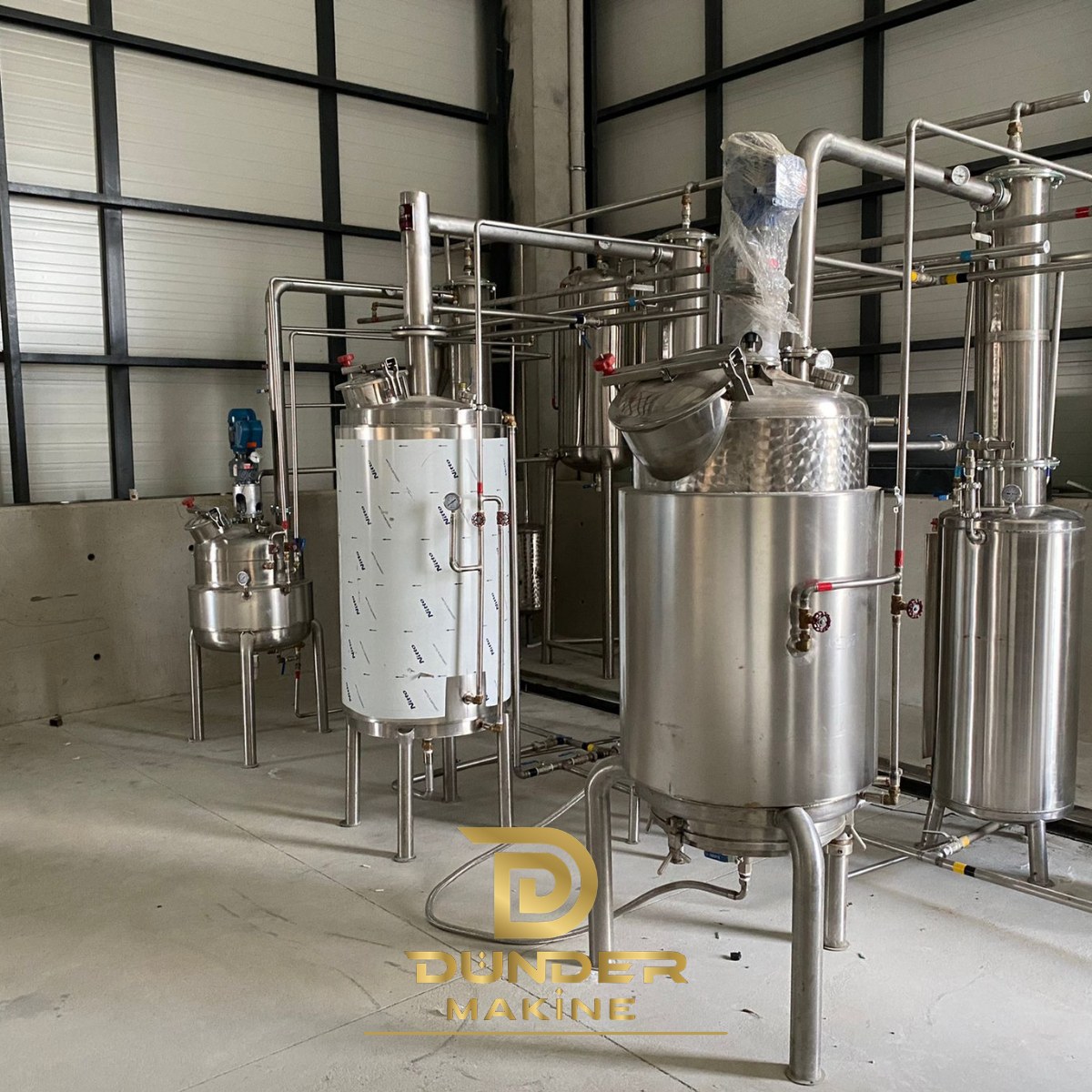
Not every producer needs a large industrial plant. For many, a compact extraction line is the smarter first step. This photo shows one, freshly installed in a new hall, with the protective film still on some tanks.
What you see in the photo
- Jacketed reactor (left): a small mixing vessel with a motor and a heating jacket.
- Process tank (centre): it holds and settles the solution.
- Extractor (right): the main vessel where plant and solvent meet.
- Columns and condensers (back): they recover the solvent for reuse.
Also, stainless steel pipes link every stage, so the solution moves without open handling.
How the compact extraction line works
- First, the operator loads the plant material into the extractor.
- Then solvent goes in and the mixing starts.
- Next, the solution moves to the tank to settle.
- After that, the column and condenser recover the solvent.
- Finally, the reactor concentrates the extract under gentle heat.
The method is a form of solid and liquid extraction. However, the small size makes it easy to run and to learn.
Who is a compact extraction line for?
- Producers who test new raw materials
- Small brands that make herbal extracts
- Companies that plan to grow in steps
Benefits
A small line needs less space, less solvent and less investment. In addition, you learn the process on a manageable scale. Later, you can add larger vessels without changing the whole plant.
In short, a compact extraction line gives you real production with a low entry cost. See larger systems on our industrial extraction systems page.
Also, we deliver the line pre-assembled and tested, so it starts working within days of arrival. Our engineers then train your team on site until the first batches run smoothly.
FAQ
Can I use ethanol? Yes. The line works with ethanol and other common solvents.
Can I expand it later? Yes. We design the line so you can add capacity step by step.
Want a compact line? Contact us.